
by Eurolng.com Staff
Gate terminal in Rotterdam: significance for small-scale LNG buyers
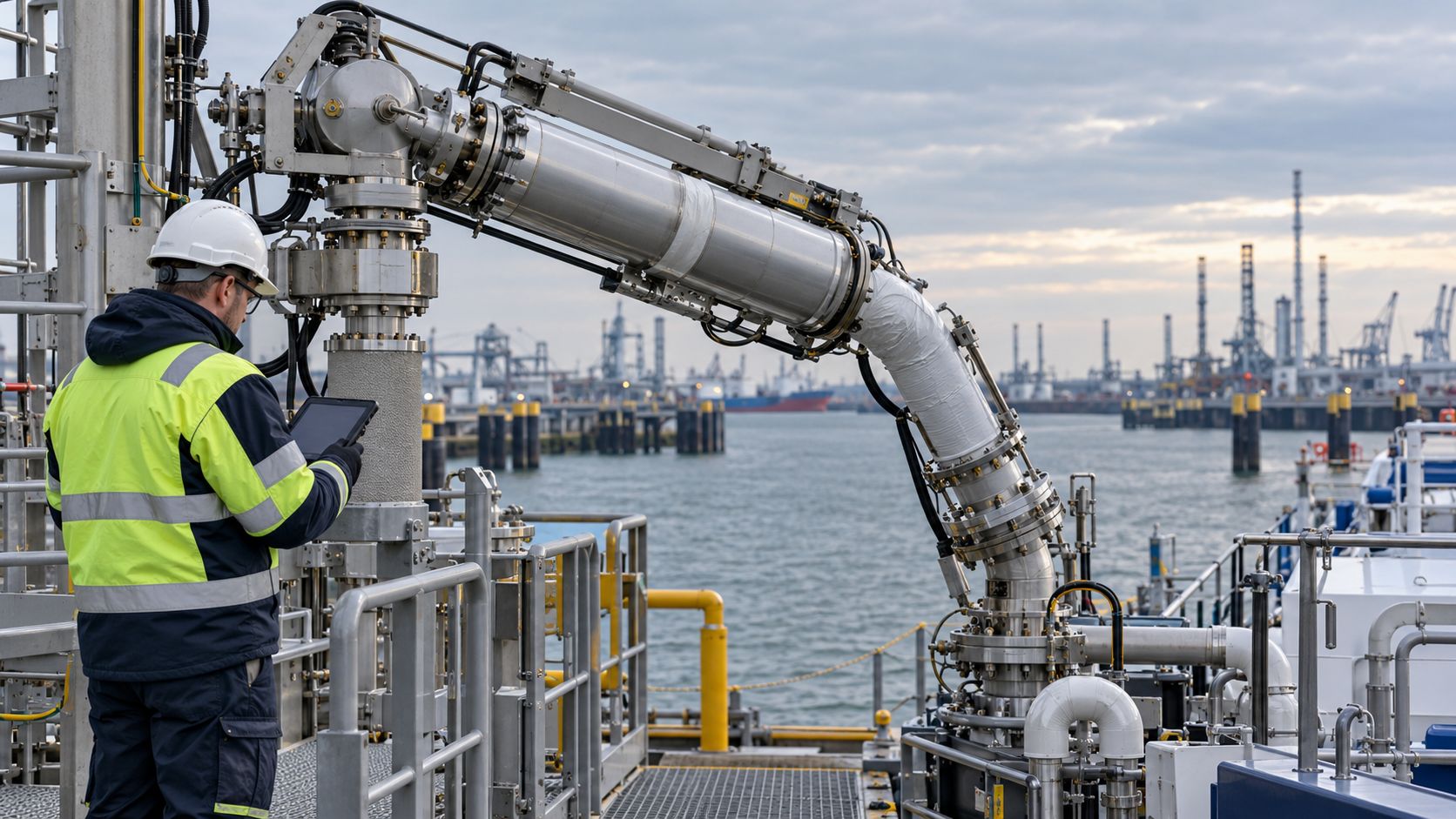
History, development and role in the North-West European ssLNG market
Gate terminal on the Maasvlakte in Rotterdam is the main LNG hub of North-West Europe and a key source of small-scale LNG for buyers in the Netherlands, Germany, Belgium, Scandinavia and the Baltic region. For ssLNG operators it is not just an import terminal, but a gateway to large volumes, truck loading and bio-LNG.
1. Brief history
Gate (Gas Access To Europe) is a joint venture of Gasunie and Vopak. Construction started in 2008; the terminal was inaugurated on 23 September 2011 by Queen Beatrix. It remains the first and only large-scale LNG import terminal in the Netherlands.
- Location: Maasvlakte (Rotterdam), near the port entrance, with easy access for large LNG carriers.
- Initial setup: three storage tanks of 180,000 m³ each, throughput capacity of about 12 bcm of gas per year.
- From the outset, small-scale services were built in: reloading onto smaller vessels and truck loading.
2. Capacity development
| Stage | Capacity / infrastructure | Status |
|---|---|---|
| 2011 (start) | ~12 bcm/year, 3 tanks | Commissioned |
| By 2024–25 | 12 firm + 4 interruptible = 16 bcm | Send-out expansion |
| 1 October 2026 | 4th tank 180,000 m³ → 20 bcm/year | Commissioned |
| End 2028 (plan) | Jetty 4 — small-scale / bunkering | Under construction |
| After 2028 | Jetty 5 (EOI 2026) | Market interest being assessed |
The fourth tank added 4 bcm of regasification capacity. Gate’s total capacity is now about 20 bcm of gas per year — a substantial share of Dutch and North-West European consumption.
3. Why Gate matters for ssLNG buyers
For the small-scale market the terminal performs several critical functions:
- Truck loading. Road tankers are loaded at the terminal and distribute LNG to off-grid sites within a radius of hundreds of kilometres (Netherlands, Belgium, Germany and beyond).
- Reloading / small-scale ship loading. Transfer onto bunker vessels and smaller tankers for delivery to other ports and for bunkering.
- Access to large volumes and diverse sources. Gate receives cargoes from the US, Norway, the Middle East and other regions — ssLNG buyers benefit from liquidity and supplier competition.
- Bio-LNG. The terminal hosts a biomethane liquefaction unit (about 100,000 t/year). Uniper was the first shipper to start bio-LNG production at Gate (2024). The fuel is certified under ISCC.
4. Small-scale infrastructure and expansion plans
Gate is already one of Europe’s busiest small-scale hubs: thousands of truck-loading operations per year and hundreds of small-scale vessel calls.
- Additional truck-loading bays have been added to ease congestion.
- Jetty 4 (construction after FID in January 2026): focused on small-scale loading and bunkering, expected start-up end of 2028.
- Jetty 5: in August 2026 Gate launched an Expression of Interest to gauge market demand for further small-scale capacity.
5. Practical relevance for buyers in the Baltic and Northern Europe
For companies active in ssLNG around the Baltic Sea:
- Gate is one of the main points from which truck and small-scale vessel cargoes leave towards Germany, Scandinavia and further east.
- Availability of bio-LNG at Gate opens the option to buy low-carbon fuel with certificates for transport and industry.
- Expansion of small-scale berths (Jetty 4/5) should ease bottlenecks and support growth in bunkering and distribution.
- Major shippers (including Uniper and others) use Gate as a base for backhaul and combined supply schemes — this affects availability and pricing of small-scale parcels.
6. Conclusion
Gate terminal has grown from the first Dutch LNG terminal (2011) into one of the central hubs of North-West Europe, with capacity of about 20 bcm after the fourth tank came online in October 2026. For ssLNG buyers its value lies in the combination of large-scale imports, truck loading, small-scale reloading and bio-LNG production. Further expansion of berths (Jetty 4 by 2028 and a possible Jetty 5) will reinforce Gate’s role as a key supplier of small-scale volumes for transport, bunkering and off-grid customers in the region.