
by Eurolng.com Staff
Bio-LNG in Poland: market start and first projects
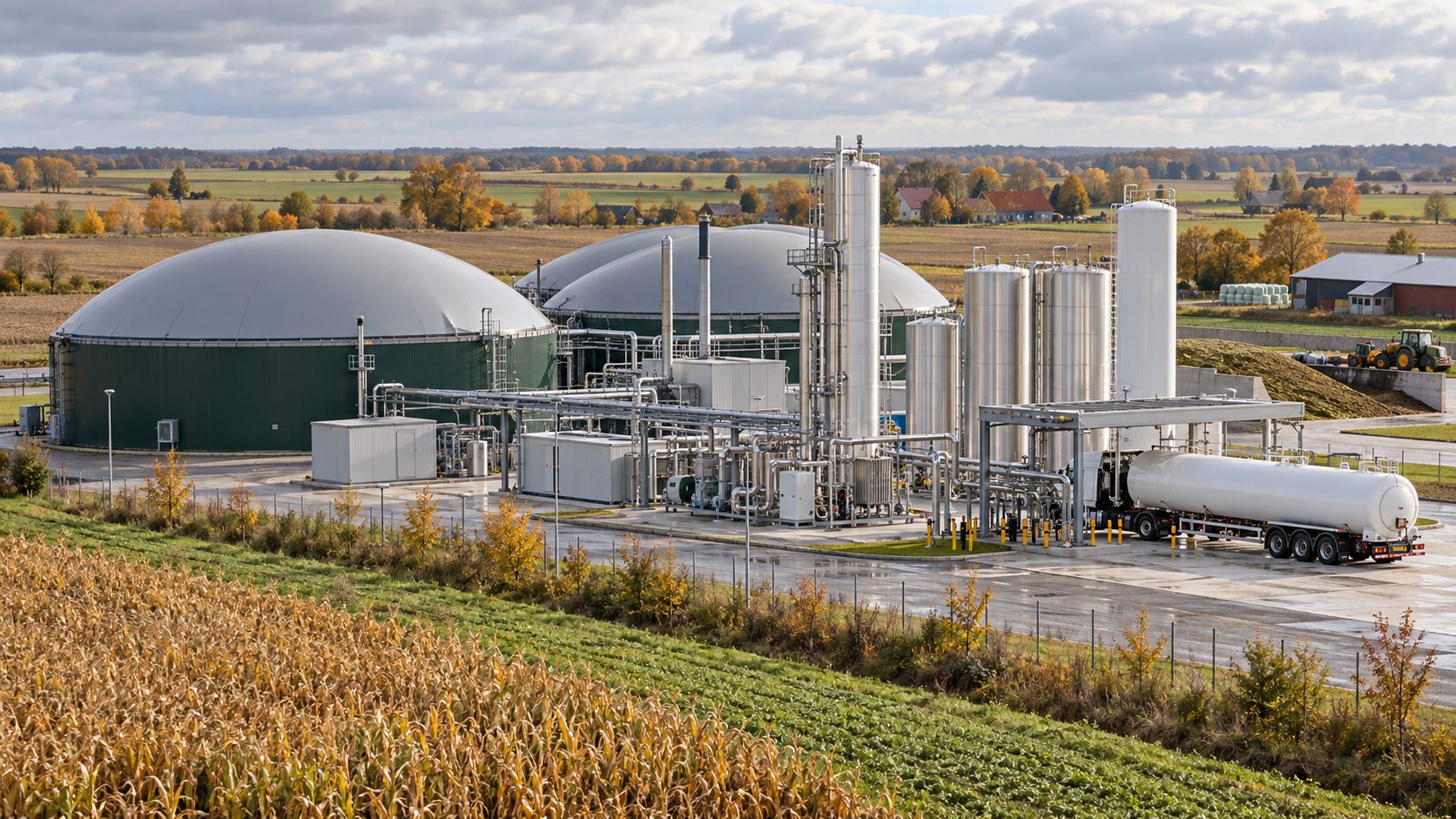
Production, infrastructure and outlook for 2026
Poland has one of the largest biomethane production potentials in Europe, yet the Bio-LNG market is only at its very beginning. As of September 2026 there are virtually no operational commercial biomethane liquefaction plants. The first projects are just moving into construction and contract stages.
1. Current status of Bio-LNG production
| Status | Number | Comment |
|---|---|---|
| Operating Bio-LNG plants | 0 | No confirmed working liquefaction units |
| Under construction / contracted | 1–2 | First projects in 2026 |
| Grid biomethane (not LBG) | First 1–2 | Cukrownia Strzelin, Agro-Biogas and others |
Biomethane injection into the Polish gas grid only started in 2025–2026. Liquefaction (Bio-LNG) is the next step and is only now being launched.
2. Key Bio-LNG projects
Nord Gas Solutions
- Contract for a 35-tonne-per-day biogas liquefaction plant.
- Positioned as Poland’s first Bio-LNG plant.
- Brownfield: uses existing biogas infrastructure.
- Feedstock — manure-based biogas, low carbon intensity. Oriented toward transport.
Orlen / PGNiG BioEvolution — Głąbów (Głąbowo)
- Poland’s first biomethane plant with an integrated Bio-LNG module.
- Capacity: more than 7 million Nm³ of biomethane per year, to be liquefied.
- Construction underway. Fuel intended for heavy-duty transport.
- In parallel Orlen is building a Bio-LNG refuelling network (first station in Płock, H2 2026; target up to 21 stations).
3. Biomethane and infrastructure
Poland still lags far behind EU leaders (France, Germany, Denmark) in biomethane, but investor interest is rising rapidly:
- First grid-injection biomethane plants appeared in 2025–2026.
- Polska Spółka Gazownictwa (PSG): dozens of connection agreements, hundreds of issued conditions.
- National potential estimated at 3–9 bcm of biomethane per year.
- Orlen is developing the full chain: production → liquefaction → own Bio-LNG stations.
4. Drivers and constraints
| Growth drivers | Constraints |
|---|---|
| Large agricultural feedstock potential | Almost no operating Bio-LNG production |
| Demand from heavy-duty transport | Biomethane market still forming |
| Activity of Orlen and foreign technology providers | Connection and regulatory hurdles |
| EU biomethane targets (REPowerEU) | Competition from imported Bio-LNG |
While domestic Bio-LNG production is absent, the Polish market relies on imports (including from other EU countries) and on the build-out of refuelling infrastructure.
5. Outlook
2026–2027 will be the period when the first Polish Bio-LNG capacities come online. Key success factors:
- Timely commissioning of the Nord Gas and Orlen/Głąbów projects;
- Expansion of the Bio-LNG refuelling network (Orlen target — up to 21 stations);
- Growing demand from logistics companies;
- Simplification of connection procedures and biomethane support schemes.
6. Conclusion
As of September 2026 Poland has no operating Bio-LNG plants. The market is at the starting line: the first liquefaction projects (Nord Gas, Orlen/Głąbów) are only entering construction, while a refuelling network is being rolled out in parallel. Grid biomethane has begun to flow, but volumes remain modest. With large feedstock potential, Poland is still an importer of Bio-LNG and a market of future growth rather than a current major producer.