
by Eurolng.com Staff
Zeebrugge LNG Terminal: Growing Hub for Small-Scale LNG and Bio-LNG
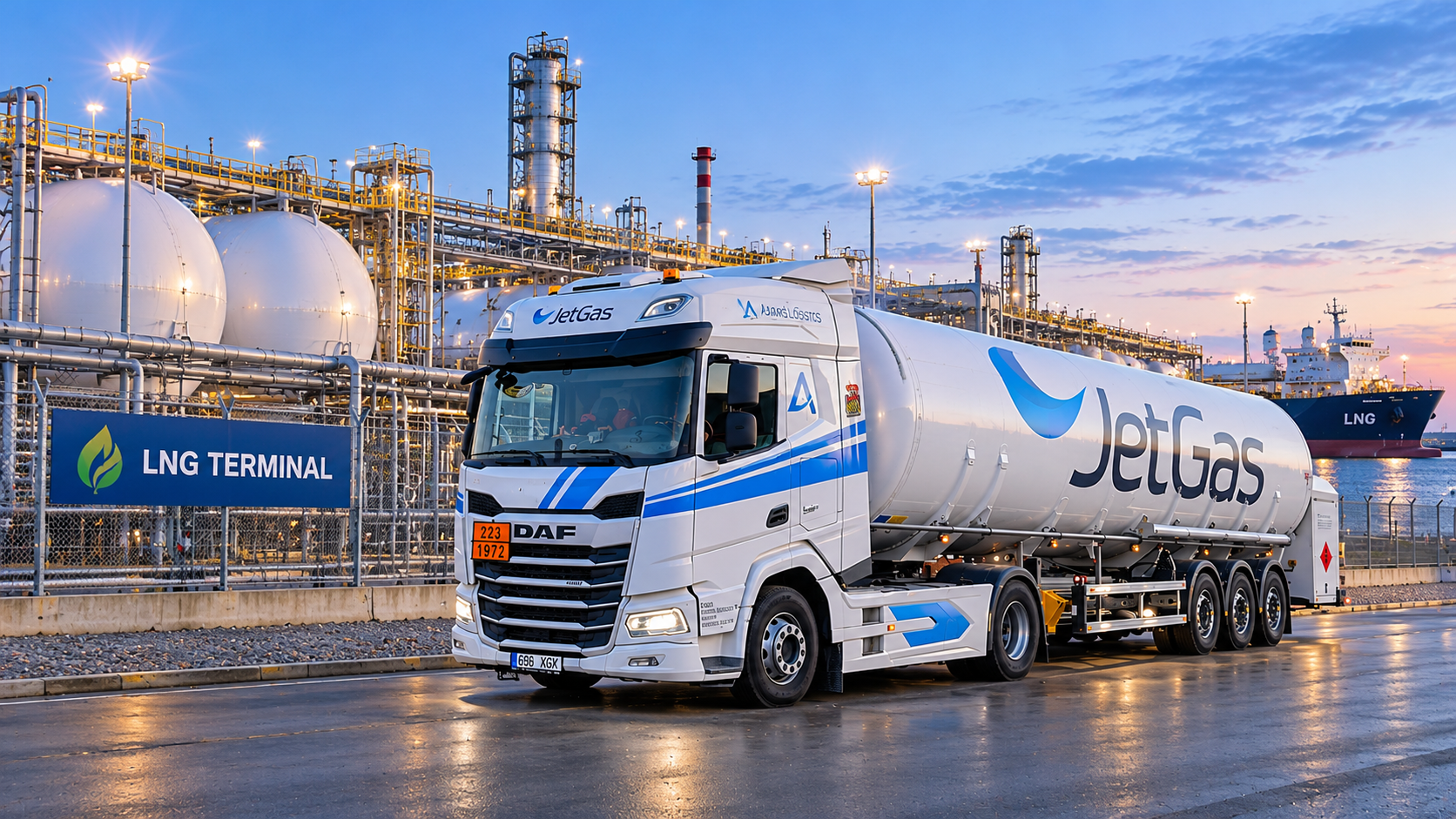
What Zeebrugge offers ssLNG and Bio-LNG clients
Belgian terminal operator Fluxys continues to expand services at its Zeebrugge LNG import terminal, with a clear focus on truck loading and Bio-LNG. For small-scale LNG (ssLNG) buyers and Bio-LNG traders, Zeebrugge has become one of the most practical and accessible options in North-West Europe and in several respects more flexible than the larger Gate terminal in Rotterdam.
Truck and container loading
Since January 2025 the terminal has operated new automated loading bays that support unassisted loading by trained and authorised drivers. Commercial capacity for 2027 stands at 16,000 truck loading slots. A typical load is approximately 18 tonnes (around 40 m³ or 260–268 MWh). Base truck-loading tariffs in November 2026 are in the region of €483 per loading, with an optional assistance service available. Slots are allocated through subscription windows and on a first-come, first-served basis.
Bio-LNG and equivalence liquefaction
The terminal is ISCC-certified and offers biomethane / recondenser liquefaction services. Clients can transfer a biomethane Proof of Sustainability (PoS) and receive a Bio-LNG PoS in return. Bio-LNG can then be loaded into semi-trailers or small-scale vessels. Demand for Bio-LNG at Zeebrugge rose 73% in 2025 to more than 2.5 TWh. Bio-LNG already accounts for nearly 70% of truck-loading volumes and around 40% of small-scale ship loadings a clear signal that the terminal has become a preferred outlet for renewable LNG in road transport and bunkering.
Additional services
Zeebrugge also supports small-scale and large-scale ship reloading, storage, regasification into the Belgian grid, and secondary trading via the Emix platform. The location provides efficient access to Belgium, the Netherlands, western Germany, northern France and bunkering operations in Antwerp.
Zeebrugge vs Gate: practical comparison for ssLNG
Gate terminal in Rotterdam remains Europe’s largest and most liquid LNG hub, with direct access to the TTF market and substantial send-out capacity. For pure large-scale trading and high volume send-out, Gate retains clear advantages. For truck-loading and Bio-LNG customers, however, the picture is different.
|
Parameter |
Zeebrugge (Fluxys) | Gate (Rotterdam) |
| Truck loading focus |
Very strong 16,000 slots/year, automated bays, high Bio-LNG share |
Available but secondary to large-scale and send-out |
| Bio-LNG / mass-balance |
Mature ISCC equivalence / recondenser service; rapid volume growth |
Available (≈100 ktpa liquefier); mainly via capacity holders |
| Access for new players |
Relatively open (subscription windows + FCFS) |
Often requires shipper / capacity-holder status |
| Geography |
Belgium, N. France, W. Germany, Luxembourg, Antwerp bunkering |
Netherlands, Germany (TTF hub), Scandinavia |
| Large-scale liquidity |
Good |
Higher – direct TTF linkage and larger send-out |
| Bio-LNG share (truck) |
≈70% of truck loadings (2025) |
Lower public share |
Key advantages of Zeebrugge for ssLNG and Bio-LNG buyers
- Dedicated truck-loading capacity. One of the highest slot counts and the highest Bio-LNG penetration among European import terminals.
- Straightforward Bio-LNG conversion. ISCC-certified equivalence liquefaction allows clients to convert biomethane PoS into Bio-LNG PoS without building their own liquefaction plant.
- Easier market entry. Subscription windows and FCFS allocation make it possible to secure capacity without long-term large-scale commitments.
- Favourable location. Efficient reach into Belgium, northern France, western Germany and the Antwerp bunkering market.
- Proven Bio-LNG momentum. The 73% growth in 2025 and the high share of renewable volumes in truck loadings demonstrate that the terminal is already functioning as a practical Bio-LNG outlet.
When Zeebrugge is the better choice
Zeebrugge is typically preferable when:
- The primary offtake channel is truck loading for filling stations or industrial customers;
- Bio-LNG with a transferable PoS is required;
- The customer targets Benelux, northern France or western Germany;
- The buyer prefers to work with moderate volumes without locking in large long-term capacity.
Gate remains the stronger option for high-volume send-out into the TTF market, deep large-scale liquidity and direct integration with the Dutch hub.
Outlook
With 16,000 truck slots planned for 2027, continued expansion of unassisted loading and sustained demand for Bio-LNG, Zeebrugge is reinforcing its position as one of the most relevant European terminals for small-scale and renewable LNG. For traders and industrial buyers focused on road transport and regional distribution, it offers a practical, already functioning alternative and in many cases a complementary option to the larger Gate complex in Rotterdam.