
by Eurolng.com Staff
LNG for small and medium-sized businesses: why it’s already profitable
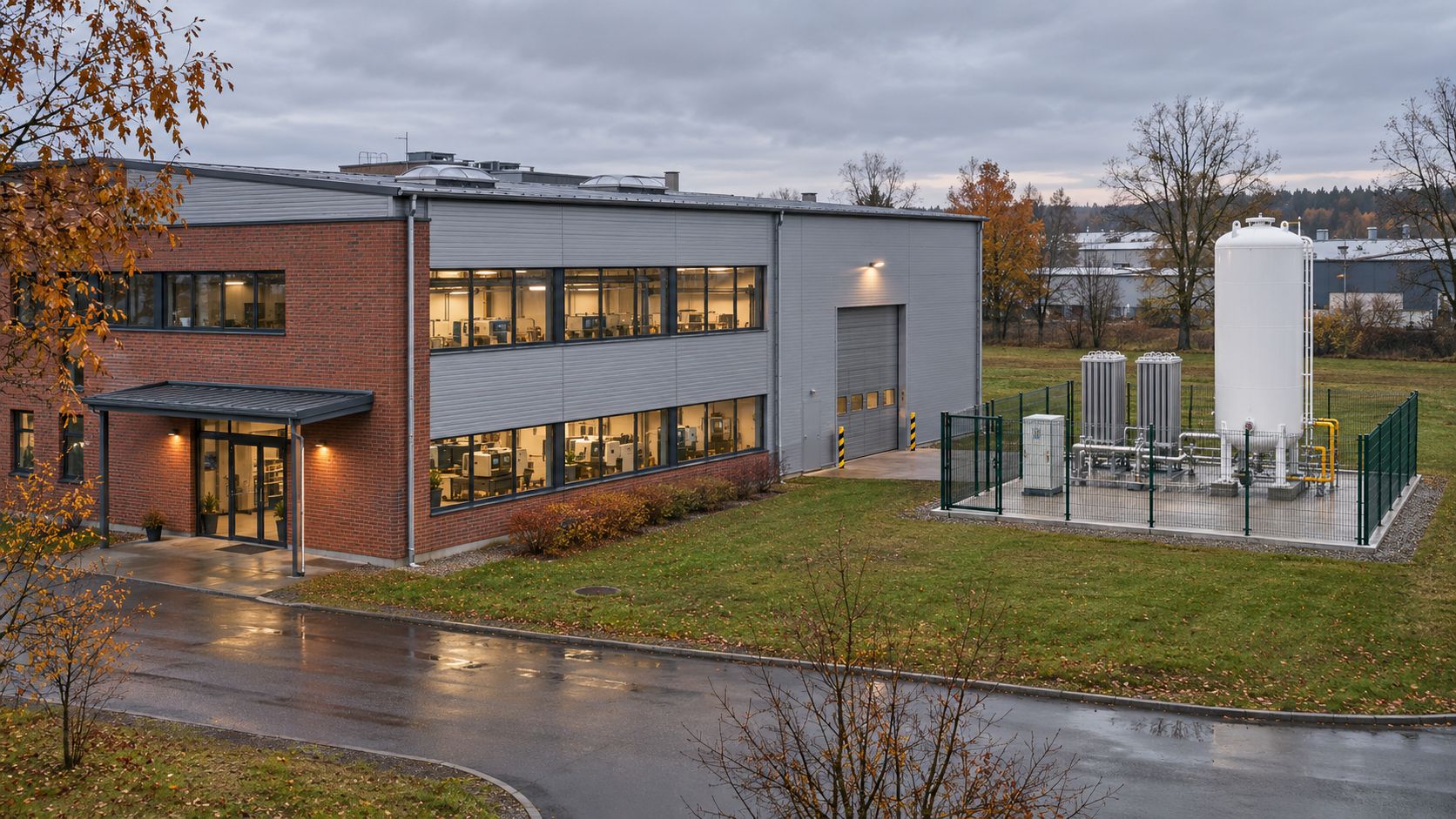
Many small and medium-sized enterprises still perceive liquefied natural gas (LNG) as “fuel for large industrial players”. In reality, small-scale LNG has been successfully used for several years at facilities with monthly consumption starting from 150–200 MWh. At volumes around 500 MWh per month, both the economics and environmental benefits typically favour LNG.
Why LNG Has Become Accessible for Smaller Businesses
The key development in recent years has been the expansion of LNG terminals and reloading stations across the Baltic region and Northern Europe. Today, a full truckload (approximately 18 tonnes or 270–280 MWh) can be delivered directly to the customer’s site on DAP terms. There is no need to build a large own terminal — a compact storage and regasification station is sufficient.
Main advantages for SMEs:
- Lower energy costs — At current TTF levels, LNG is often cheaper than LPG and significantly more cost-effective than diesel or fuel oil on a per-MWh basis.
- Price stability — The pricing formula (TTF + fixed premium + logistics) is transparent and predictable.
- Cleaner emissions — Burning LNG produces roughly 10–15% less CO₂ than LPG and substantially lower NOx, SOx and particulate emissions compared with liquid petroleum products.
- Future-proof solution — The same infrastructure allows a seamless switch to Bio-LNG with sustainability certificates (PoS) without replacing equipment.
Economics: Example at 500 MWh per Month
Typical calculation for an industrial site in the Baltic or Central European region (November 2026):
| Indicator | LNG | LPG | Difference (LNG) |
|---|---|---|---|
| Price at site | ≈ 114 €/MWh | ≈ 132 €/MWh | −18 €/MWh |
| Monthly cost | ≈ 57,000 € | ≈ 66,000 € | −9,000 € |
| Annual cost | ≈ 686,000 € | ≈ 792,000 € | −106,000 € |
| Annual CO₂ emissions | ≈ 1,210 t | ≈ 1,370 t | −160 t |
Even taking into account higher capital expenditure for cryogenic equipment, the payback period for switching from LPG or fuel oil is usually 3–5 years. With the expected introduction of carbon pricing under ETS2 from 2027, the advantage of LNG will only increase.
What Companies Gain in Practice
- Predictable costs — Price is linked to a transparent market index rather than volatile oil-product pricing.
- Efficient logistics — Working with full truckloads reduces the specific cost of transportation.
- Flexibility — Companies can start with one station and scale volumes as production grows.
- Environmental benefits — A lower carbon footprint improves reporting to banks, customers and participation in green tenders.
- Path to Bio-LNG — When demand or decarbonisation requirements appear, it is enough to add a sustainability certificate — no equipment replacement is needed.
Who Benefits Most from the Transition
- Manufacturing companies with relatively stable heat or process gas consumption (from 200–250 MWh per month).
- Businesses currently using LPG, fuel oil or diesel that want to reduce both costs and emissions.
- Companies preparing for stricter environmental regulations and potential increases in CO₂ costs.
How to Get Started
The first step is to calculate the real total cost of your current fuel and compare it with an LNG offer on DAP terms. The second step is to assess the site for a compact regasification station. The third step is to agree on a pricing formula and a delivery schedule based on full truckloads.
Small-scale LNG is no longer the exclusive domain of large industrial plants. For many small and medium-sized enterprises, it is already today a more economical, cleaner and forward-looking solution.
Source: Analysis by eurolng.com based on market data as of November 2026. Calculations are indicative and depend on specific delivery conditions and region.