
by Eurolng.com Staff
What would have to change for Europe to stop paying more for LNG
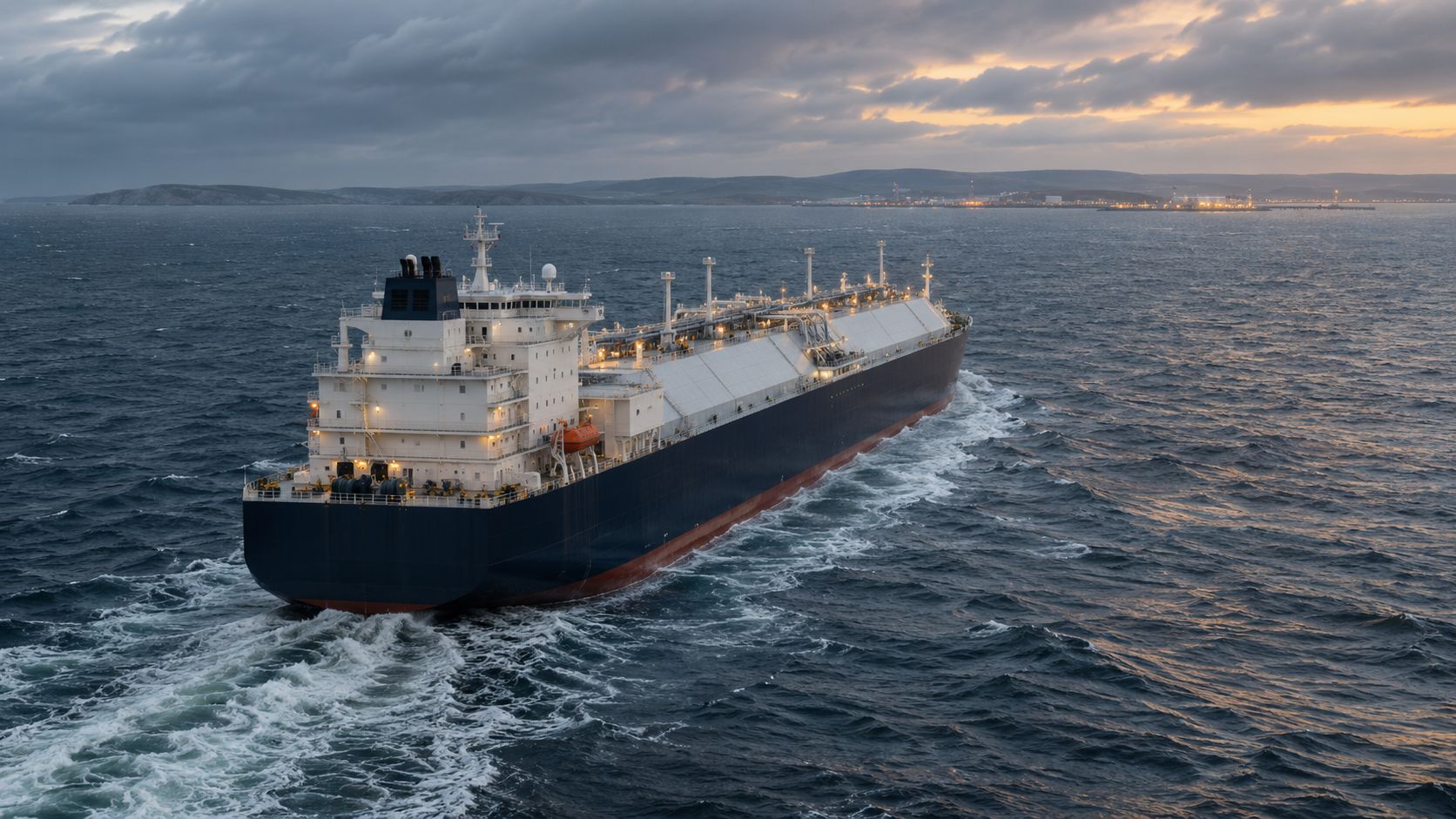
Rystad’s Hormuz scenario: Europe buys about 24 million tonnes less and still face at least $12 billion more on the LNG bill. The premium is a procurement problem, not a one-week spike.
Europe can cut LNG demand and still pay more. That is the result Rystad Energy published on 26 October 2026. In a case where Qatari and UAE deliveries stay unavailable from March through the end of 2026, Europe’s LNG bill rises by a minimum of $12 billion, or 18%, while demand falls by 24 million tonnes. Globally, importers spend at least $39 billion more and buy 60.7 million tonnes less. Portfolio costs move from $217.8 billion to at least $256.3 billion.
This is a modelled disruption case, not an audited import invoice. It is still the cleanest explanation of why the European premium has been so hard to shake. A correction in TTF — from above €100/MWh at the start of November toward €85–86/MWh by 6–7 November — changes the weekly print. It does not change the book.
1. The paradox, in numbers
| Europe | East Asia | |
|---|---|---|
| Spot share of LNG imports | about 65% | 14.5% |
| Price move in the scenario | average price up 47% | oil-linked term contracts up about 28% |
| Hub- and spot-linked contracts | a quarter of Europe’s term book is gas-indexed | those contracts up about 72% |
| Cost increase outside the Gulf | at least +$12 billion, +18% | smallest relative rise, +9.7% |
| Lost Qatari volume, 2026 | 20.6 million tonnes of 24.7 million tonnes scheduled | largest nominal Gulf exposure, better covered by other contracts |
East Asia is not immune. It is insured. Eighty-two per cent of its long-term LNG contracts are linked to oil, and oil has risen far less than spot LNG. Europe buys most of its LNG on the spot market, so the replacement cargo is priced at the margin.
2. Why the premium holds
The spot book is the shock absorber. Europe entered the disruption already dependent on spot. Rystad sees little room to raise that share further: after demand destruction, Europe’s spot share rises by only 5.49% versus the pre-war estimate. When a contracted cargo disappears, the replacement is a spot cargo. Asia, with spot at 14.5% of imports, does not have to do that on the same scale.
Qatar is the volume that cannot be swapped quietly. Losing 20.6 million tonnes of a 24.7 million tonne Qatari schedule is not a rounding error. Those tonnes were contracted. The tonnes that replace them are not, and they are bid against every other short buyer.
Stocks leave less time to wait. EU storage through the autumn sat well below the five-year average. A milder week can take TTF off its highs, as it did in the first week of November. It does not rebuild a buffer large enough to skip the next tender.
Asia still sets the clearing price. When JKM pays more than TTF on a netback basis, flexible Atlantic cargoes turn east. Europe then has to outbid that netback or lose the ship. High spot prices do push some Asian demand out of the market. That helps. It is not a supply policy.
While those four conditions hold, “Europe pays more” is not a sentiment. It is the invoice.
3. What would actually have to change
Ranked by how fast each one hits the bill.
- Qatar and the UAE back through Hormuz. This is the assumption the whole scenario rests on. Even a partial return of Qatari volume cuts the replacement gap directly. A credible reopening usually shows up in TTF before the first full cargo schedule does. Without it, every other measure is a hedge around a hole.
- Less of the book left on spot. Europe needs more term and mid-term cover, including hybrid formulas — TTF plus an oil link — and destination flexibility. Rystad’s own conclusion is blunt: treating gas as transitional does not remove the need to buy the gas still consumed. Deferring term procurement until substitutes exist leaves the residual volume priced at replacement cost. Contract length should match that residual demand. Diversifying the index is not the same as having a ship.
- Atlantic tonnes that do not pass Hormuz. US Gulf Coast supply to Europe avoids the strait. That is the strategic point, not a slogan. New US and Canadian liquefaction in 2027–2028 is the volume that can make the premium smaller. Two limits belong in the same sentence. First, the plants have to start, not just be announced. Second, Henry Hub indexation is a different risk, not a free hedge: more feedgas demand can lift Henry Hub even while new liquefaction eases TTF and Asian spot. Buyers should test that over the life of the contract, not on today’s spread.
- A weak Asian winter. A mild season in Japan, Korea and China frees spot cargoes without a single new train. It is the only factor that can move the bill inside one quarter. It cannot be planned, and it should not be the base case.
- Fuller EU stocks and demand that stays moderate. Leaving winter with a higher inventory, and without a rebound in industrial and power burn, means Europe does not have to win every tender. It lowers the urgency premium. It does not replace missing Qatari tonnes.
4. A realistic timetable
This winter. The bill changes only if Qatari and UAE flows return in size, or if North-East Asia has a very mild season and stops competing for Atlantic spot. A weekly TTF sell-off is not that event. From 1 January 2027 the EU ban on long-term Russian LNG removes another contracted stream. That tightens the same spot book further.
2027–2028. The lever that can be signed, rather than hoped for, is new liquefaction outside the Gulf plus a shift in European portfolios toward term cover. Until those cargoes are on the water, the scenario’s logic still applies.
Structurally. As long as Europe is the marginal buyer, with most of its LNG on spot and a large share of the rest indexed to gas, a supply deficit will be priced in Europe first. East Asia’s oil-linked book will lag. That is not a market failure. It is the contract mix.
Takeaway for the ssLNG market
The base molecule and the spot premium stay elevated until the Gulf gap closes and Atlantic supply actually grows. A move from €104/MWh back toward the mid-€80s is a better entry for a formula. It is not evidence that cheap spot is back.
For small-scale LNG and Bio-LNG the practical reading is unchanged.
- Fix volume and the formula before the cargo is needed. TTF front-month plus premium plus logistics will keep moving with the benchmark.
- Do not plan a 2027 book on a quick return of discounted spot. The Russian LNG ban and a still-open Hormuz risk sit on the same side of the ledger.
- Physical access still carries its own premium: a full tanker, a slot, and a terminal that can reload into trailers. Baltic and north-west European options matter more when the large-scale market is tight, not less.
- Bio-LNG does not escape TTF. It does price off a different stack — certificate, GHG saving, quota. In a high-TTF winter that stack is often easier to defend than an uncovered fossil spot cargo.
Sources: Rystad Energy, “More for Less”, 26 October 2026; ICE Endex Dutch TTF, week of 2–7 November 2026. The Rystad figures are a scenario in which Qatari and UAE LNG deliveries are unavailable from March to the end of 2026, not a final import bill.