
by Eurolng.com Staff
CMA CGM and Engie to build a biomethane plant in Le Havre
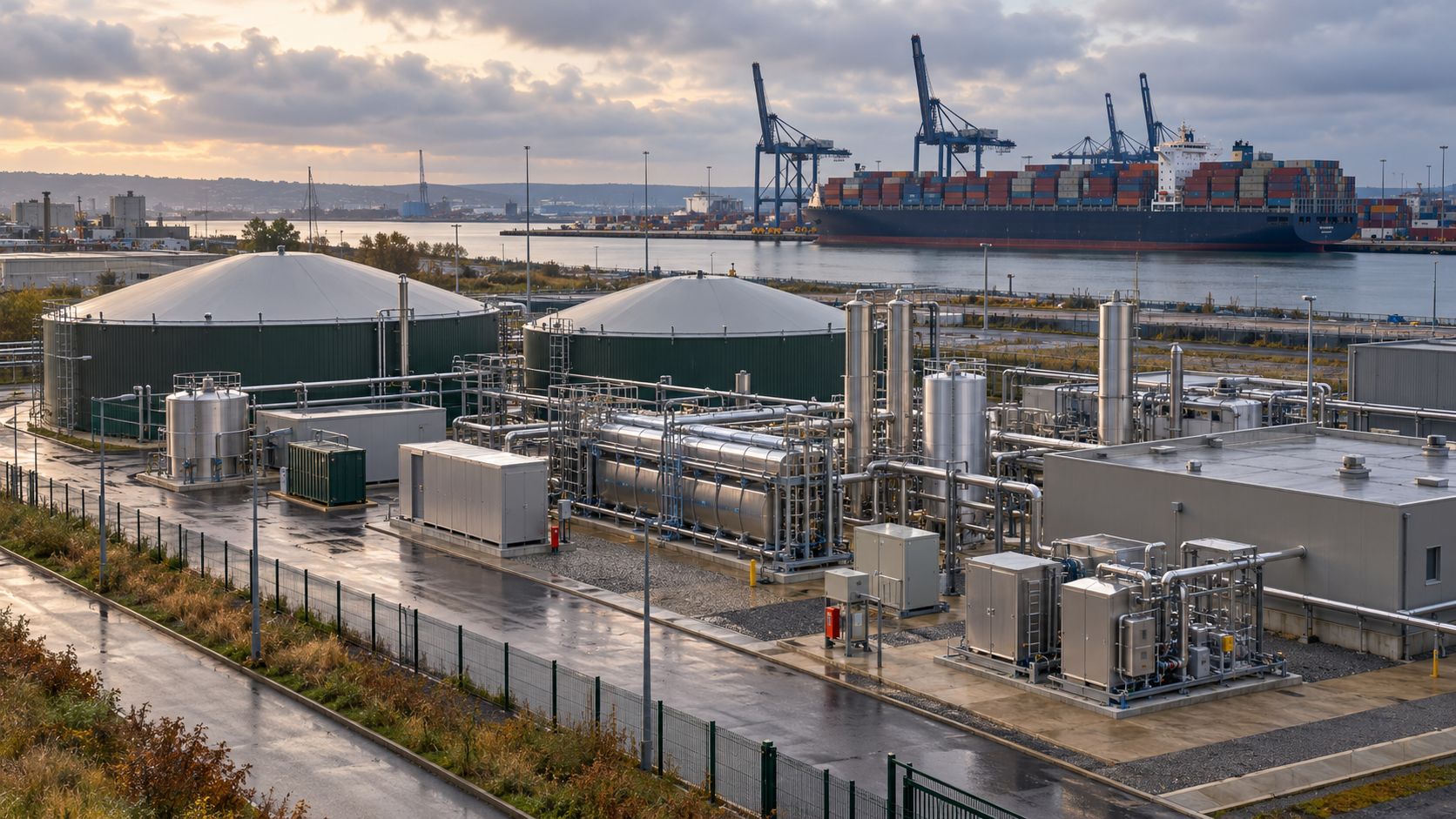
Biomethane for LNG-powered container ships and other projects in France
In October 2026 French groups CMA CGM and Engie signed a framework agreement to develop a biomethane production plant in the Le Havre industrial-port zone (Normandy). The project is aimed directly at supplying CMA CGM’s growing fleet of LNG-powered container ships and is one of the most visible steps by the French shipping industry to secure its own Bio-LNG volumes.
1. Project parameters in Le Havre
The plant is designed to produce about 7,000 tonnes of biomethane per year (roughly 100 GWh). Feedstock will consist of livestock waste, household biowaste and agricultural residues. Start-up is planned for 2029–2030, subject to a final investment decision (FID).
Key figures:
- Volume: 7,000 t/year of biomethane (~100 GWh)
- Emissions avoided: about 23,000 t CO₂ per year
- Lifecycle greenhouse-gas reduction: at least 67%
- By-products: 100,000 t of digestate (fertiliser) and 13,000 t of biogenic CO₂
- Investment: estimated at around €40 million (industry estimates)
Engie will lead development, engineering, permitting, construction and operation. CMA CGM will join as a minority shareholder through its PULSE fund, which focuses on technologies and infrastructure that support the decarbonisation of transport and logistics.
2. How the biomethane reaches the ships
The biomethane will be injected into the European gas grid under a certified mass-balance system. This allows CMA CGM to claim the renewable volumes for its fleet without requiring physical delivery of that specific gas to bunkering ports. Once liquefied, biomethane (Bio-LNG) is fully compatible with CMA CGM’s dual-fuel engines and existing LNG bunkering infrastructure — no engine or terminal modifications are needed.
3. Why it matters for the CMA CGM fleet
By the end of 2026 CMA CGM expects to operate around 81 vessels capable of running on LNG. By 2030 the combined fleet of ships that can use LNG, biomethanol and synthetic fuels is projected to exceed 200 units. Biomethane delivers an immediate reduction in carbon intensity and helps meet FuelEU Maritime requirements. Own production also reduces exposure to Bio-LNG supply shortages and price volatility.
4. Other similar projects in France
The Le Havre plant is neither the first nor the only move by CMA CGM and French energy companies into maritime biomethane.
Salamandre (Le Havre, cancelled)
In 2022 Engie and CMA CGM announced the Salamandre plant, designed for 11,000 t of biomethane per year via pyrogasification of wood waste (investment ~€150 million). Start-up was repeatedly postponed, and in early 2025 the project was cancelled for economic and regulatory reasons. The 2026 plant — smaller and based on conventional anaerobic digestion — effectively replaces Salamandre.
Marseille (2021 feasibility study)
In 2021 CMA CGM, together with TotalEnergies, Elengy (Engie group) and EveRé, carried out a feasibility study on producing liquefied biomethane from household waste in the Marseille metropolitan area. The project remained at the study stage.
Agreement with Suez (2024)
In 2024 CMA CGM signed a memorandum of understanding with Suez to develop biomethane production sites in Europe. The target volume is up to 100,000 tonnes of biomethane per year by 2030 — a broader framework than the single Le Havre plant.
The CMA CGM–Engie partnership on synthetic methane and Bio-LNG dates back to 2021. In addition, France’s PPE 3 energy programme aims for 44 TWh of biomethane production by 2030; part of that volume could ultimately serve the maritime sector.
5. Conclusion
The Le Havre plant is a practical example of a major shipowner securing part of its Bio-LNG needs through direct investment in production. The 7,000-tonne volume is modest relative to the entire CMA CGM fleet, yet the project is important as a model: own feedstock, mass-balance accounting, compatibility with existing LNG vessels and synergy with local agriculture. Against the background of the cancelled Salamandre project and the parallel Suez agreement, France is gradually building a chain from waste to biomethane to marine bunkering. For the small-scale LNG and Bio-LNG market this is a clear signal: large consumers are increasingly moving upstream to lock in volumes and cut their carbon footprint.