
by Eurolng.com Staff
European LNG terminals: Krk, Klaipėda, Świnoujście and Inkoo
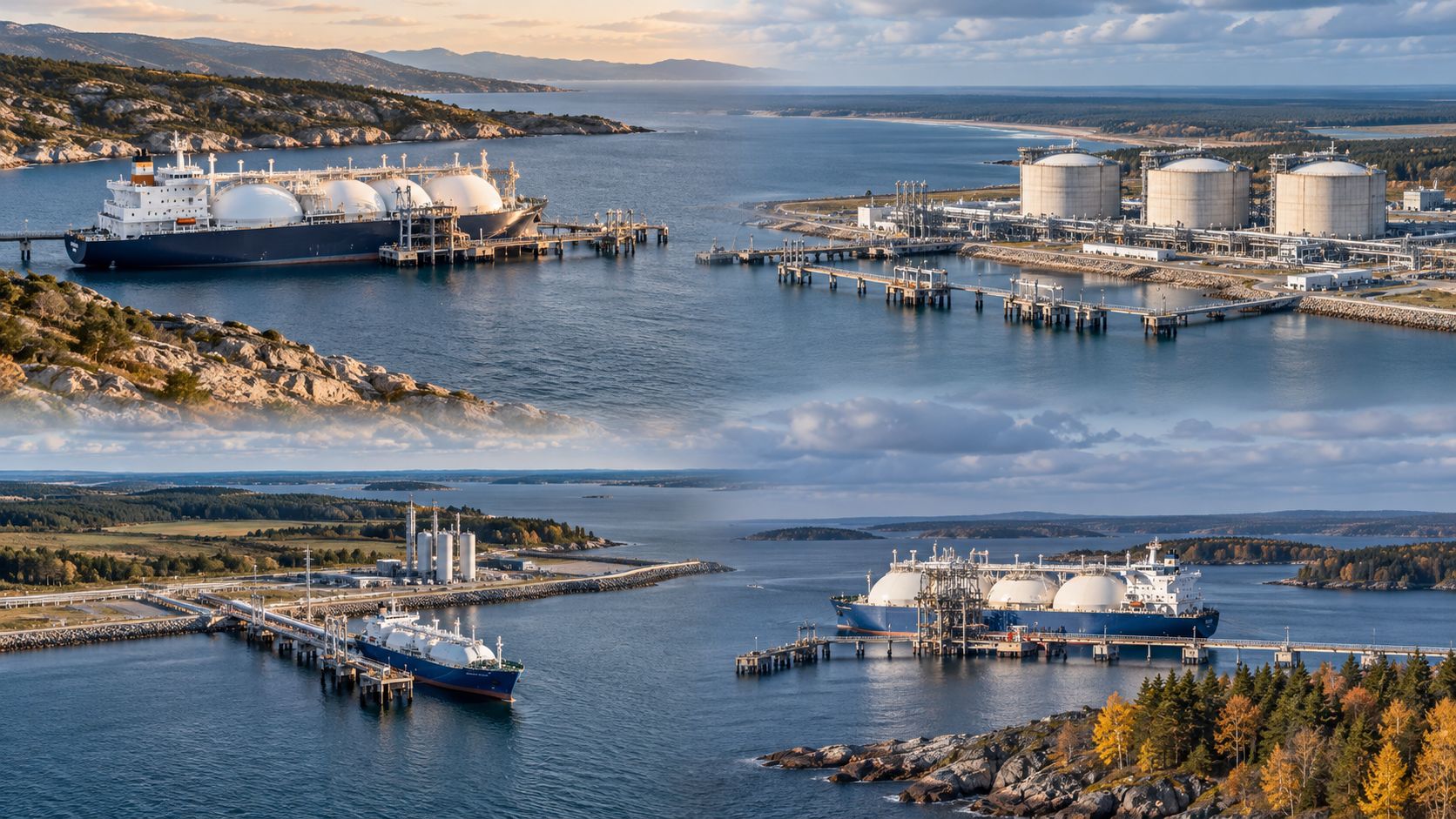
Capacity, small-scale segment and regional role compared — 2025–2026
Since 2022, LNG terminals have become a key tool of European energy security. Four facilities — Krk (Croatia), Klaipėda (Lithuania), Świnoujście (Poland) and Inkoo (Finland) — serve different regions while competing for the same cargoes and traders. Below is a comparison by capacity, utilisation, the small-scale segment and strategic role.
1. Summary table
| Parameter | Krk | Klaipėda | Świnoujście | Inkoo |
|---|---|---|---|---|
| Type | FSRU | FSRU + onshore station | Onshore | FSRU |
| Start | 2021 | 2014 / 2017 | 2016 | 2022 |
| Capacity | 6.1 bcm/year | ~4–5 bcm | ~6–8+ bcm | up to ~5 bcm |
| Utilisation | High (to 2037) | High | Very high | Medium / seasonal |
| Truck loading | Developed | Strongest in Baltics | Among EU leaders | None |
| Region | SEE / Central Europe | Baltics + Poland | Poland + neighbours | Finland + Baltics |
2. Krk (LNG Hrvatska) — hub for South-Eastern Europe
The FSRU LNG Croatia has operated since January 2021 in Omišalj (island of Krk). At the end of 2025 capacity was raised from 3.9 to 6.1 bcm of gas per year with a new regasification module. More than 60% of the gas entering the Croatian transmission system passes through the terminal. Capacity is almost fully booked through 2037.
The terminal actively develops ship-to-truck and small-scale reloading. Gas flows to Croatia, Hungary, Slovenia and Bosnia and Herzegovina. The full 6.1 bcm potential is still constrained by Plinacro pipelines; once those are completed, additional volumes will become available to the market.
3. Klaipėda — Baltic leader in small-scale LNG
The FSRU Independence plus the onshore reloading station (five 1,000 m³ tanks) form the most mature small-scale hub in the Baltic region. In 2025 the station set a record: 1,834 truck loadings and 26 small-scale carriers. Historically around 80% of truck deliveries went to Poland.
The commercial operator of the reloading station is ORLEN (until 2030). The terminal serves Lithuania, Latvia, Estonia and Poland and is developing bunkering. On flexibility of small-scale services Klaipėda remains the regional benchmark.
4. Świnoujście — Poland’s strong onshore player
The onshore terminal operated by GAZ-SYSTEM has been running since 2016. After expansion (third tank, second jetty) capacity reached about 6–8+ bcm per year. It is one of the busiest LNG ports in the EU: hundreds of cargoes over ten years, availability above 99%.
On truck loading Świnoujście is among Europe’s leaders: nearly 11,000 tankers in 2025; a fourth loading bay allows up to 60 trucks per day. Contracted truck-loading capacity is around 360,000 tonnes of LNG per year. Ship-to-ship and bunkering are developing. An FSRU in Gdańsk (+6.1 bcm) is under construction nearby.
5. Inkoo — Finnish FSRU with a seasonal role
The FSRU Exemplar has operated since late 2022. Potential capacity is up to about 5 bcm / more than 40 TWh per year. Utilisation is lower than at Klaipėda and Świnoujście: many free spot slots; the terminal is used more as a seasonal and peak source.
There is no LNG truck loading at the Inkoo terminal. Reloading onto smaller vessels is possible, but the small-scale segment is less developed than at Klaipėda and Świnoujście. The terminal supplies Finland and, partly, the Baltics via the gas network.
6. Who leads on key criteria
- Nominal capacity: Krk and Świnoujście (6+ bcm).
- Small-scale LNG (truck): Świnoujście by a clear margin, then Klaipėda. Inkoo has no truck loading.
- Maturity and reliability: Świnoujście (onshore, 10 years).
- Small-scale flexibility + bunkering: Klaipėda.
- Regional coverage: SEE — Krk; Baltics/Poland — Klaipėda and Świnoujście.
7. Conclusion
The four terminals serve different geographies and roles. Krk quickly raised capacity to 6.1 bcm and became a hub for Central and South-Eastern Europe, but is constrained by pipelines. Klaipėda remains the Baltic benchmark for ssLNG and small-scale services. Świnoujście is the most mature onshore terminal, with record truck loading and high utilisation. Inkoo acts as seasonal backup for Finland and does not offer truck loading. For ssLNG buyers the choice depends on logistics: Poland and the northern Baltics rely on Świnoujście and Klaipėda; South-Eastern Europe on Krk.