
by Eurolng.com Staff
Biomethane and Bio-LNG in the Baltics: who leads — Lithuania, Latvia or Estonia
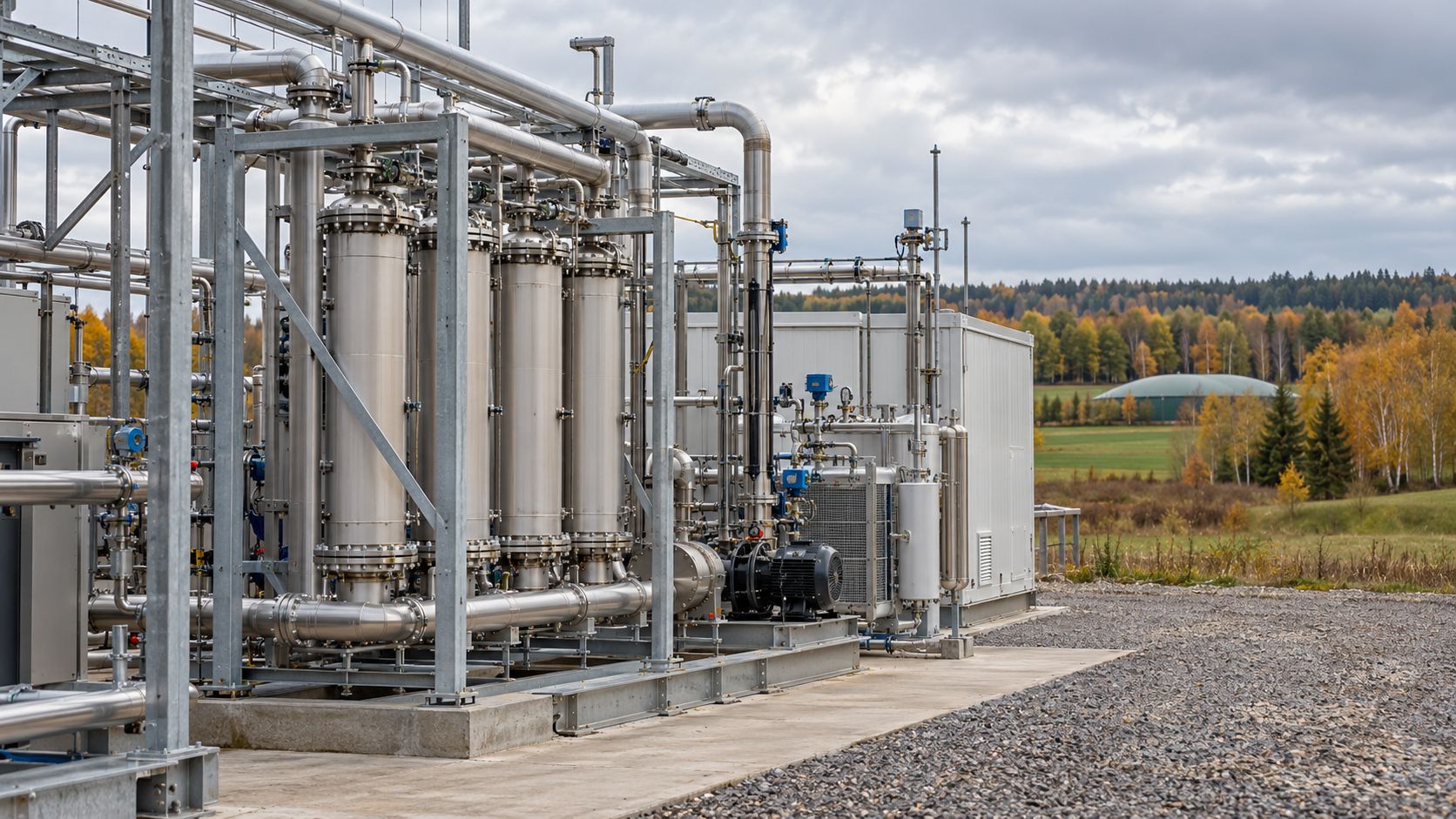
Gas production, physical Bio-LNG and Bio-CNG — 2025–2026 snapshot
The three Baltic states are developing biomethane in different ways. Lithuania leads on gaseous biomethane volumes and the number of plants. Latvia is the only one with physical production of liquefied biomethane (Bio-LNG) — about 400 tonnes per month. Estonia makes the strongest use of biomethane in transport as Bio-CNG. Below is a fact-based comparison.
1. Summary table
| Indicator | Lithuania | Latvia | Estonia |
|---|---|---|---|
| Biomethane (gas) | Leader: 12–14 plants, rapid volume growth | Growing; volumes still lower | ~306 GWh (2025), target ~500 |
| Physical Bio-LNG | None | ~400 t/month | None |
| Virtual Bio-LNG | Declared / certified | — | — |
| Bio-CNG (transport) | Developing | Present / developing | Strongest (buses, trucks) |
2. Lithuania — leader in gaseous biomethane
In early 2026 the country had 12–14 biomethane plants with combined capacity of about 67–76 MW. Production rose sharply: in individual months of 2026 guarantees of origin were 2.4–3 times higher than a year earlier. Biomethane is injected into the Amber Grid network; part of the volume is exported (Czechia, the UK and others).
On Bio-LNG: a virtual biomethane liquefaction service has been announced at the Klaipėda terminal and certification has been completed. No actual tonnes of Bio-LNG have been sold under this scheme yet. There are no physical biomethane liquefaction plants in Lithuania.
3. Latvia — the only physical Bio-LNG in the three
On gaseous biomethane volumes Latvia still trails Lithuania, but it is the only Baltic state with real liquefied biomethane production: local plants upgrade biogas and liquefy it. Combined output is about 400 tonnes of Bio-LNG per month.
No such physical liquefaction units exist in Estonia or Lithuania. Grid injection infrastructure (public entry points and new facilities) is expanding. Bio-LNG from Latvian plants goes into transport and related segments.
4. Estonia — leader in Bio-CNG for transport
In 2025 Estonia produced about 306 GWh of biomethane; with new plants output is expected to approach ~500 GWh per year. Biomethane already accounts for a visible share of gas consumption (~10%).
The main difference is end use: biomethane goes largely into transport as Bio-CNG (buses in Tartu, Rakvere, Pärnu, and trucks). There is no physical Bio-LNG production.
5. Conclusion
Among Estonia, Latvia and Lithuania there is no single leader across all segments. Lithuania leads gaseous biomethane production. Latvia is the only one of the three with physical Bio-LNG production (about 400 t per month). Estonia makes the strongest use of biomethane in transport as Bio-CNG. For the ssLNG and biofuels market this means: for Bio-LNG supply in the region, rely for now on Latvian liquefaction output; for gaseous biomethane and guarantees of origin — on Lithuania; for Bio-CNG vehicle refuelling — on Estonia.