
by Eurolng.com Staff
400 dual-fuel vessels in 2027: LNG bunkering demand could double
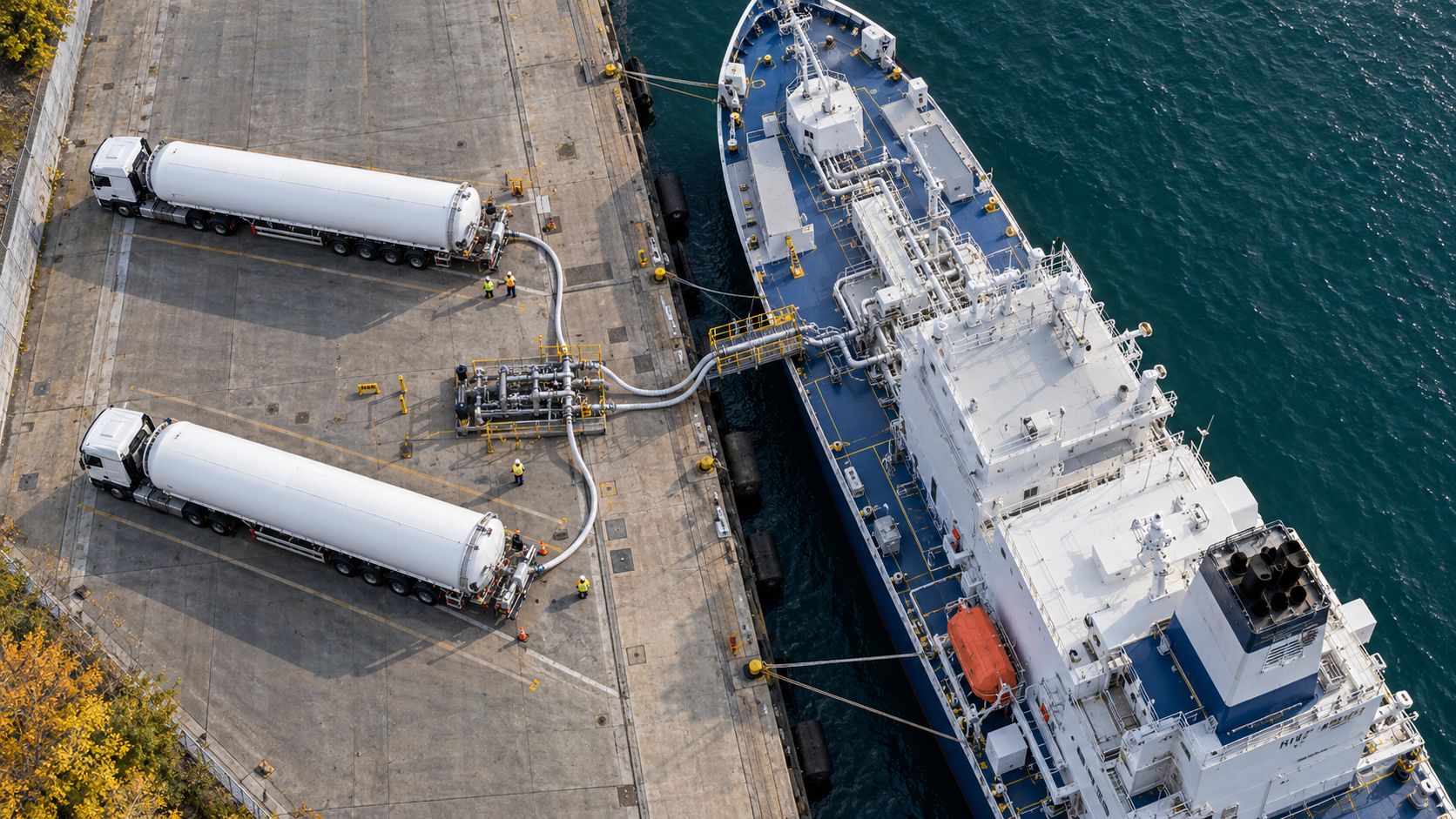
Infrastructure and truck-to-ship as the key constraint
Global demand for liquefied natural gas as marine bunker fuel could double over the next two to three years. The driver is the expected entry into service of more than 400 dual-fuel vessels equipped with LNG-capable engines in 2027. This outlook was presented at the SIBCON 2026 industry conference in Singapore and reported by Ship & Bunker.
1. Fleet growth outpaces infrastructure
Participants in the SIBCON discussion highlighted an important shift: as the fleet of LNG-fuelled ships expands, the main constraint is no longer the availability of the fuel itself, but the development of bunkering infrastructure. New LNG supply volumes from the US and Qatar can meet global market needs, estimated at 400–500 million tonnes. However, marine fuel suppliers need to expand their fleets of LNG bunker vessels capable of serving ships not only in the major hubs — Rotterdam, Shanghai and Singapore — but also in secondary ports.
It is precisely on the periphery and in mid-sized ports that demand for truck-to-ship bunkering is emerging. This method is optimal for parcels of roughly up to 100 tonnes of LNG and has already proven viable in numerous operations in European ports.
2. Truck-to-ship: an opportunity for ssLNG traders
Truck-to-ship bunkering does not require a dedicated bunker vessel and relies on a fleet of road tankers with pumps. Such an operation — including with Bio-LNG — can be carried out by many regional small-scale LNG traders in Northern Europe. Among companies with the relevant capabilities:
- Gasum, Elenger Marine, JetGas
- Barter, Omne Energia, PGNiG, Duon
- Molgas, GasCom, BarMalGas, ViGo and others
Many of these companies already hold Bio-LNG in their portfolios alongside conventional LNG. Demand for low-carbon molecules in shipping continues to grow under FuelEU Maritime and cargo owners’ requirements to cut emissions across the supply chain.
3. What this means for the ssLNG market
The growth of the dual-fuel fleet in 2027 creates several direct effects for the small-scale segment:
An additional sales channel. Road tankers that today serve industry and road transport gain a new stable demand in ports — especially where there is no permanent bunker vessel.
Rising value of Bio-LNG. Shipping increasingly requests certified biomethane. Traders that already have Proof of Sustainability and a Bio-LNG supply chain gain a competitive edge.
Geography of demand expands. Beyond Rotterdam, Singapore and Shanghai, truck-to-ship operations will be needed in mid-sized and regional ports in Northern Europe, the Baltic and the Mediterranean — where large bunker vessels are not economically justified.
Key benchmarks
| Indicator | Benchmark |
|---|---|
| New dual-fuel vessels (2027) | more than 400 units |
| Potential growth in bunkering demand | doubling over 2–3 years |
| Optimal truck-to-ship parcel | roughly up to 100 t LNG |
| Global LNG market (reference) | 400–500 million tonnes |
Conclusion
The entry into service of more than 400 dual-fuel vessels in 2027 could double demand for LNG bunkering within two to three years. The constraint will not be the availability of molecules, but infrastructure. The truck-to-ship method opens a direct niche for regional ssLNG and Bio-LNG traders: they already operate road tankers and have delivery experience, and can cover parcels of up to about 100 tonnes in ports that large bunker vessels do not serve. For players in Northern Europe and the Baltic this is one of the most realistic growth channels against the backdrop of tightening climate requirements in shipping.