
by Eurolng.com Staff
QATAR AND HORMUZ: OCTOBER LNG LOADINGS HIT HIGHEST LEVEL SINCE THE CONFLICT BEGAN
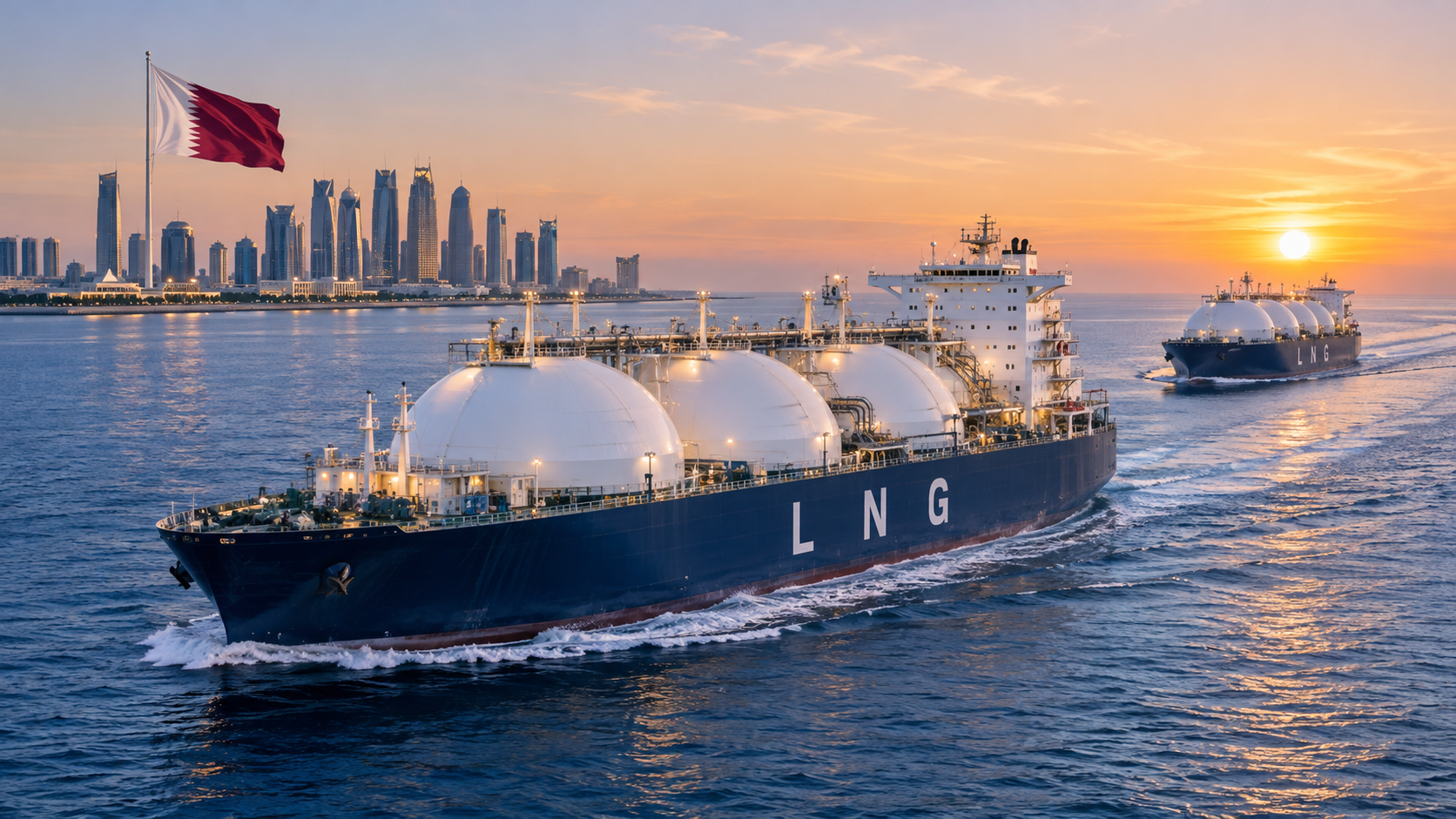
More LNG tankers left the Strait of Hormuz in October than in any other month since the conflict started. Qatar has recovered more than 30% of its pre-war volume, but full normalisation is still some way off
In October 2026 more LNG tankers left the Strait of Hormuz than in any other month since the conflict between the United States and Iran disrupted shipping in the region. M/V tracking data and analysis from S&P Global Energy and Kpler point to a partial but clear recovery of flows from Qatar and the UAE while underlining how far the market remains from pre-war levels.
- What the October data show
According to S&P Global Energy, 31 LNG tankers transited the strait in October. Of these, 23 loaded at Qatar’s Ras Laffan and eight at Das Island in the UAE. That is the highest monthly figure since February, when the war began. In September, 23 carriers left the strait.
Kpler counted 42 loaded carriers in October against 27 the previous month. At Ras Laffan, analysts put loadings at 35 tankers and more than 2.7 million tonnes the highest since the conflict started. By comparison, Qatar shipped almost 6.2 million tonnes of LNG in February.
Loadings from Das Island held at September levels, with seven cargoes in October.
|
Indicator |
September 2026 |
October 2026 |
| Tankers via Hormuz (S&P) |
23 |
31 |
| Loadings (Kpler) |
27 |
42 |
| Ras Laffan volume |
— |
>2.7 Mt (35 tankers) |
| February (pre-war reference) |
— |
~6.2 Mt (Qatar) |
- How far has recovery gone?
Eric Yep, senior principal analyst at S&P Global Energy, assesses that UAE transit through the Strait of Hormuz has returned to pre-war levels. Qatar has recovered more than 30% of its pre-war volume.
That is a meaningful step, but not full recovery. October loadings from Ras Laffan (above 2.7 Mt) remain less than half of the February level (~6.2 Mt). The market is still operating under elevated risk and incomplete availability of Qatari capacity for European and Asian buyers.
- STS transfers off Sohar
Kpler recorded ship-to-ship (STS) LNG transfers at the Sohar anchorage in Oman. Two carriers that had exited the strait with Ras Laffan cargoes conducted STS operations:
- SC Prestige transferred LNG to BW ENN Crystal Sky; the vessel is bound for South Korea.
- Al Mafyar transferred cargo to Shandong Redwood and Ejnan, which delivered to Pakistan.
Such operations show that part of Qatari volumes is being redirected or re-parcelled outside the higher-risk zone a typical logistics adaptation under transit constraints.
- Implications for Europe and the ssLNG market
A partial recovery of Qatari loadings eases pressure on the spot market and can support stabilisation of TTF if the trend holds. Pre-war volumes have not been restored: more than 30% recovery is progress, but it does not close the shortfall that has kept European prices elevated.
For European small-scale LNG buyers the signal is mixed:
- Higher Hormuz transit reduces the risk of an extreme supply squeeze on the global market.
- Full normalisation of Qatari supply to the EU is still not assured and depends on how the regional situation develops.
- The base ssLNG formula (TTF + premium + logistics) remains sensitive to Hormuz news: any fresh disruption would again lift spot prices and urgency premiums.
Takeaway
October was the strongest month for LNG transit through Hormuz since the conflict began. Qatar raised Ras Laffan loadings to a post-February high and recovered more than 30% of pre-war volume; the UAE returned to pre-war transit levels. STS activity off Sohar confirms adaptation of logistics chains. For the European market this is a signal of easing, not of risk disappearing: while Qatari volumes remain substantially below pre-war levels, the structural TTF–Henry Hub premium and spot volatility persist. The coming months will show whether the October peak becomes a sustained trend or a one-off spike.