
by Eurolng.com Staff
SMALL-SCALE LNG MARKET UPDATE: MID-NOVEMBER 2026
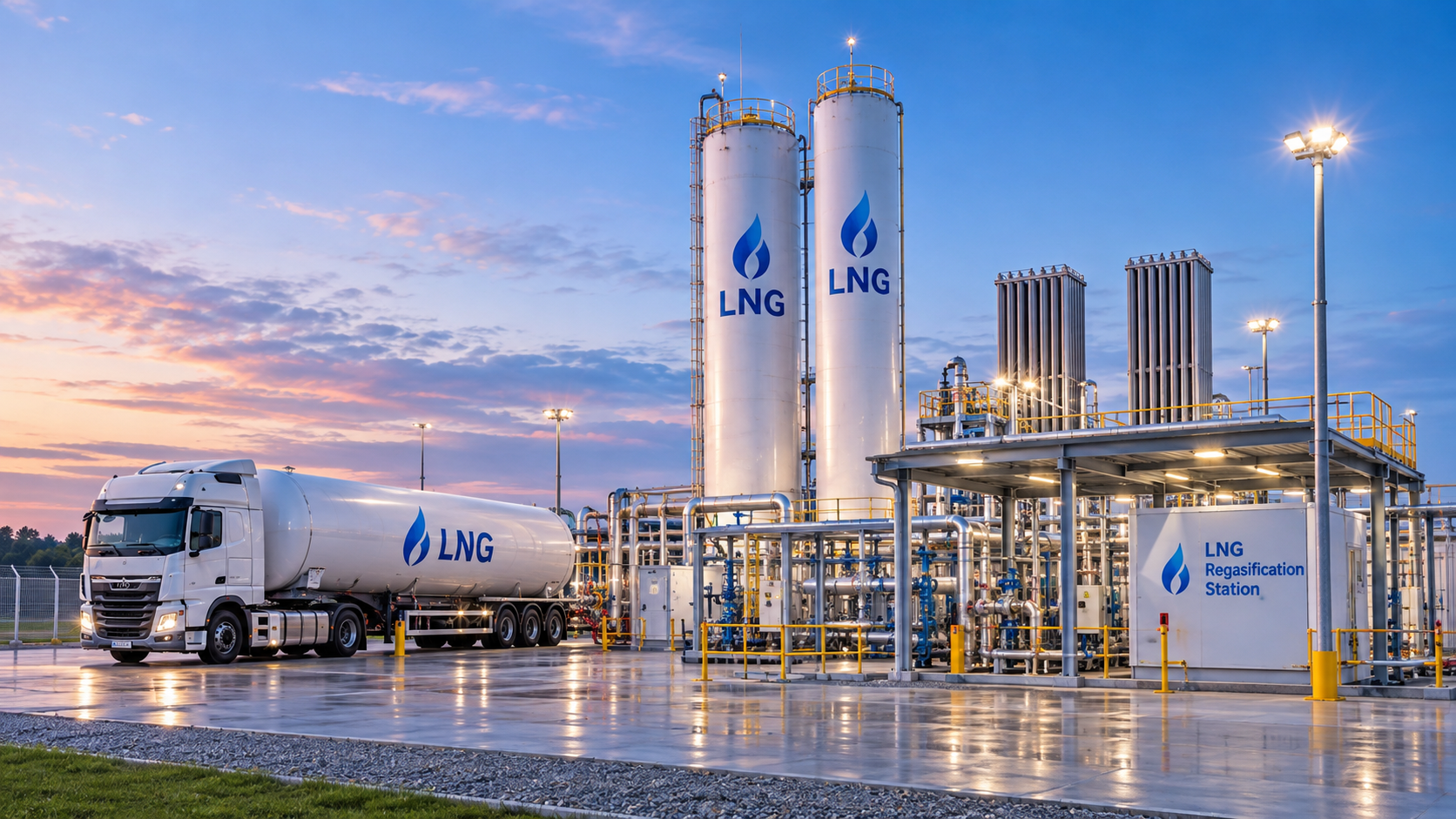
Bunker fleet expansion, SSLNG slots in Italy, Bio-LNG growth in Germany and the Baltic winter supply picture
The European small-scale LNG market is moving on several fronts at once: new bunker vessels for the Mediterranean, successful SSLNG capacity auctions in Italy, stronger Bio-LNG sales at German truck stations, and regular winter LNG cargoes into the Baltic–Finland region. At the same time the base molecule remains expensive after the early-November TTF correction, and ETS2 is approaching. Below is a concise reading of the latest signals.
- Bunkering fleet and vessels
Titan Clean Fuels (Molgas Group) and Sogestran have signed a long-term agreement for the construction, charter and operation of a new 6,000 m³ LNG bunker vessel. The ship is designed for the Western Mediterranean and will load at multiple terminals, offer ship-to-ship bunkering of LNG and liquefied biomethane (LBM), and provide gas-up and cool-down services. Ports in scope include Fos-Marseille, Barcelona and Genoa. Low air draft will allow cruise-ship bunkering without a pontoon. The vessel will itself run on LNG or LBM and will bring the Molgas Group fleet to eight bunker vessels.
Separately, Stolt-Nielsen is selling its 50% stake in Avenir LNG to NYK. The two parties will form a joint venture focused on small-scale LNG supply and bunkering. Avenir currently operates five bunker vessels with two more under construction.
The global small-scale LNG carrier fleet (under 40,000 m³) has reached roughly 140 vessels. About half of the newbuildings delivered in the past five years are dedicated bunker ships — a clear signal that maritime demand is driving the next wave of capacity.
- Terminals and SSLNG slots
OLT Offshore LNG Toscana (FSRU Toscana, Livorno) has completed its first auctions of dedicated small-scale slots. Twelve slots of 7,500 liquid cubic metres each were allocated on a monthly basis. The service allows loading of LNG onto small carriers for ship-to-ship bunkering or coastal depot supply, and later complementary unloading slots may be offered. OLT is the first Italian terminal to provide a regular SSLNG product of this type.
North Sea Port (Vlissingen, Terneuzen and Ghent) has confirmed that its terminals meet the safety requirements for LNG bunkering (truck-to-ship and ship-to-ship) for both seagoing and inland vessels, following an independent risk analysis.
- Bio-LNG: road and marine
Germany reported 47,335 tonnes of LNG sold at truck stations in Q3 2026 about 18% higher year-on-year and the second-highest quarterly figure since records began in 2019. Bio-LNG is now available at more than 210 filling stations. The price advantage versus diesel remains material and continues to support demand.
On the marine side, Titan’s analysis shows that FuelEU Maritime pooling lifted the share of liquefied biomethane in its methane deliveries to 19.1% in 2025 from 6.5% in 2024. Supply agreements for Bio-LNG to LNG-fuelled car carriers and other vessels (including deals involving Axpo and Titan) continue to expand the commercial footprint of certified biomethane in European bunkering.
With EEX set to open ETS2 primary auctions and secondary spot from 18 January 2027, the carbon cost of fossil fuels used in road transport and buildings will become a daily market number. Certified Bio-LNG with strong GHG savings is structurally better positioned under that regime.
- Baltic and Finland supply
Elenger has taken delivery of the first of five planned winter LNG cargoes from the United States at the Port of Inkoo in Finland. Each cargo is roughly 1 TWh. Further shipments are scheduled through March 2027. The volumes will support the Inčukalns underground storage facility in Latvia and customers in Finland and the Baltic states. The region remains connected to the global LNG market; US and Norwegian supply, together with storage, underpin the winter balance.
- Price context for ssLNG buyers
After the sharp correction in early November, TTF front-month has been trading in the roughly €85–90/MWh zone lower than the €100+ prints of late October, but still elevated by historical standards. Small-scale formulas continue to track TTF front-month plus premium plus logistics. Terminal access and full-truck delivery premiums do not disappear when the benchmark falls.
For buyers the practical message is unchanged: fix volume and timing where possible, treat Bio-LNG and certified attributes as a separate commercial stack, and prepare contract language for ETS2 cost pass-through from 2027.
Takeaway
Infrastructure is expanding: new bunker vessels in the Mediterranean, SSLNG slots in Italy, confirmed bunkering capability in North Sea Port. Bio-LNG is gaining share on both road and marine routes. Baltic winter supply is supported by regular US cargoes. The base molecule remains expensive and ETS2 will add another layer of cost to fossil routes. Players who can combine reliable logistics, certified Bio-LNG and clear carbon-cost clauses are best placed for the next phase of the European ssLNG market.