
by Eurolng.com Staff
Small-Scale LNG in Germany: Bio-LNG Has Almost Completely Replaced Fossil Gas at Filling Stations
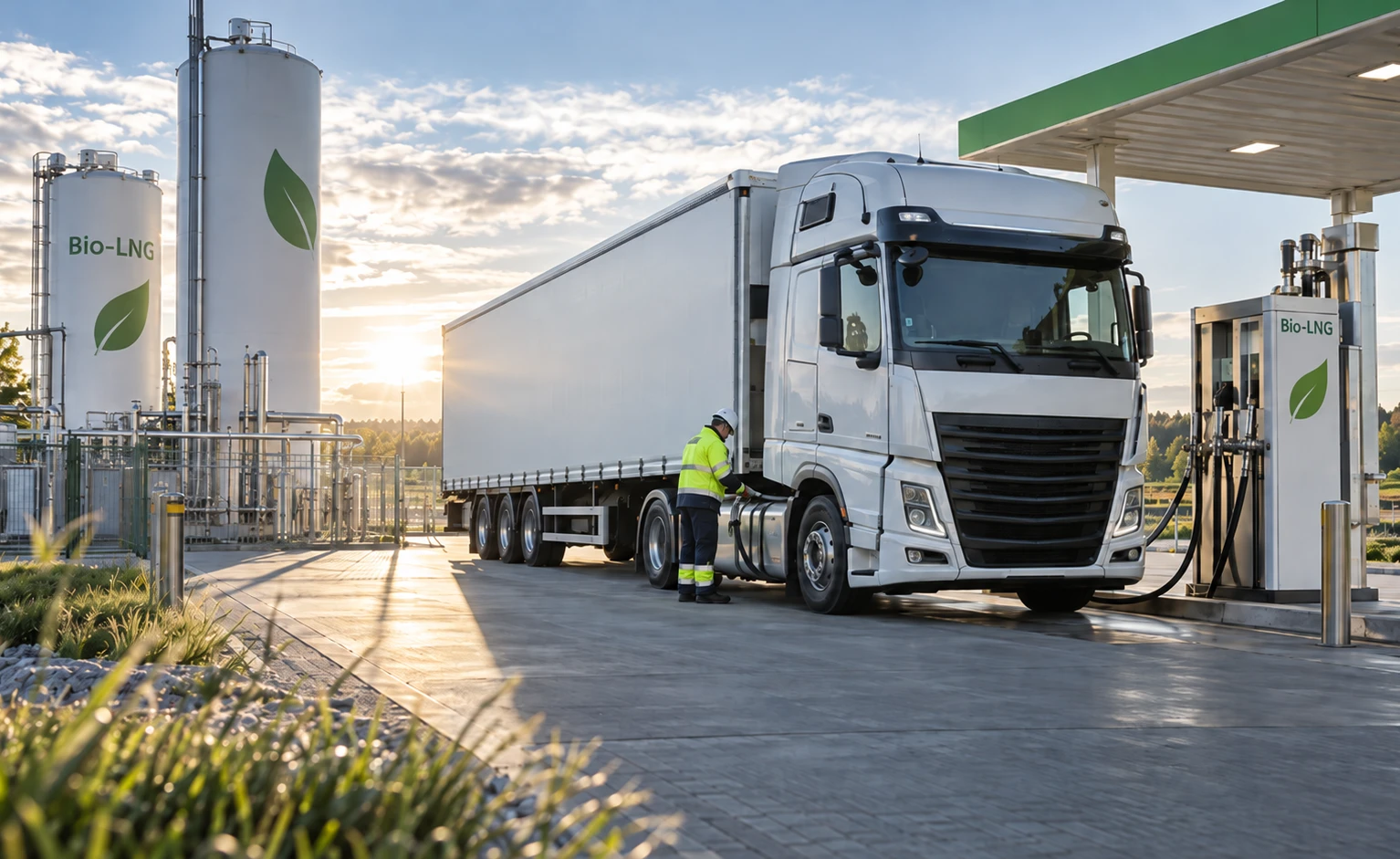
The small-scale LNG market in Germany has undergone a fundamental shift in recent years. By 2025–2026, the dominant product at LNG filling stations is no longer conventional fossil LNG, but Bio-LNG — liquefied biomethane.
Key figures
In 2025, German LNG filling stations sold approximately 166,500 tonnes of LNG. Of this volume, 98.5% was biomethane. In practice, fossil LNG has almost disappeared from the retail network.
At the same time, the infrastructure is already well developed: Germany has around 180–200 public LNG filling stations located along major transport corridors. In addition, a number of private and corporate stations operate at logistics hubs.
Why this matters
- Bio-LNG delivers substantial greenhouse-gas emission reductions and helps companies meet RED II/III requirements and German GHG quota (THG-Quote) obligations.
- The technology is proven: Bio-LNG trucks are already operating in long-haul and cross-border transport.
- Major players such as Verbio, Alternoil, Rolande and Liqvis continue to expand their networks and offer 100% bio-based product.
In parallel, Germany is expanding its large-scale LNG import infrastructure (terminals in Wilhelmshaven, Brunsbüttel, Stade and Mukran). This creates additional potential for future small-scale offtake and distribution.
What is holding back growth
Despite the near-complete switch to Bio-LNG, total sales volumes at filling stations have stagnated in recent years. The main reasons are:
- limited long-term clarity around the GHG quota system;
- the return of the full truck toll (Lkw-Maut) for LNG vehicles since 2024;
- competition from subsidised Bio-LNG imported from other EU countries.
Outlook
The small-scale segment in Germany has already passed a decisive stage: the filling-station market has become a Bio-LNG market. The infrastructure is in place and the product is available. Further growth will depend largely on regulatory decisions and measures to support demand.
For suppliers from the Baltic region and Central Europe, this means continued demand for certified Bio-LNG with strong greenhouse-gas performance — particularly for truck deliveries.