
by Eurolng.com Staff
Bio-LNG in ship bunkering in Northern Europe
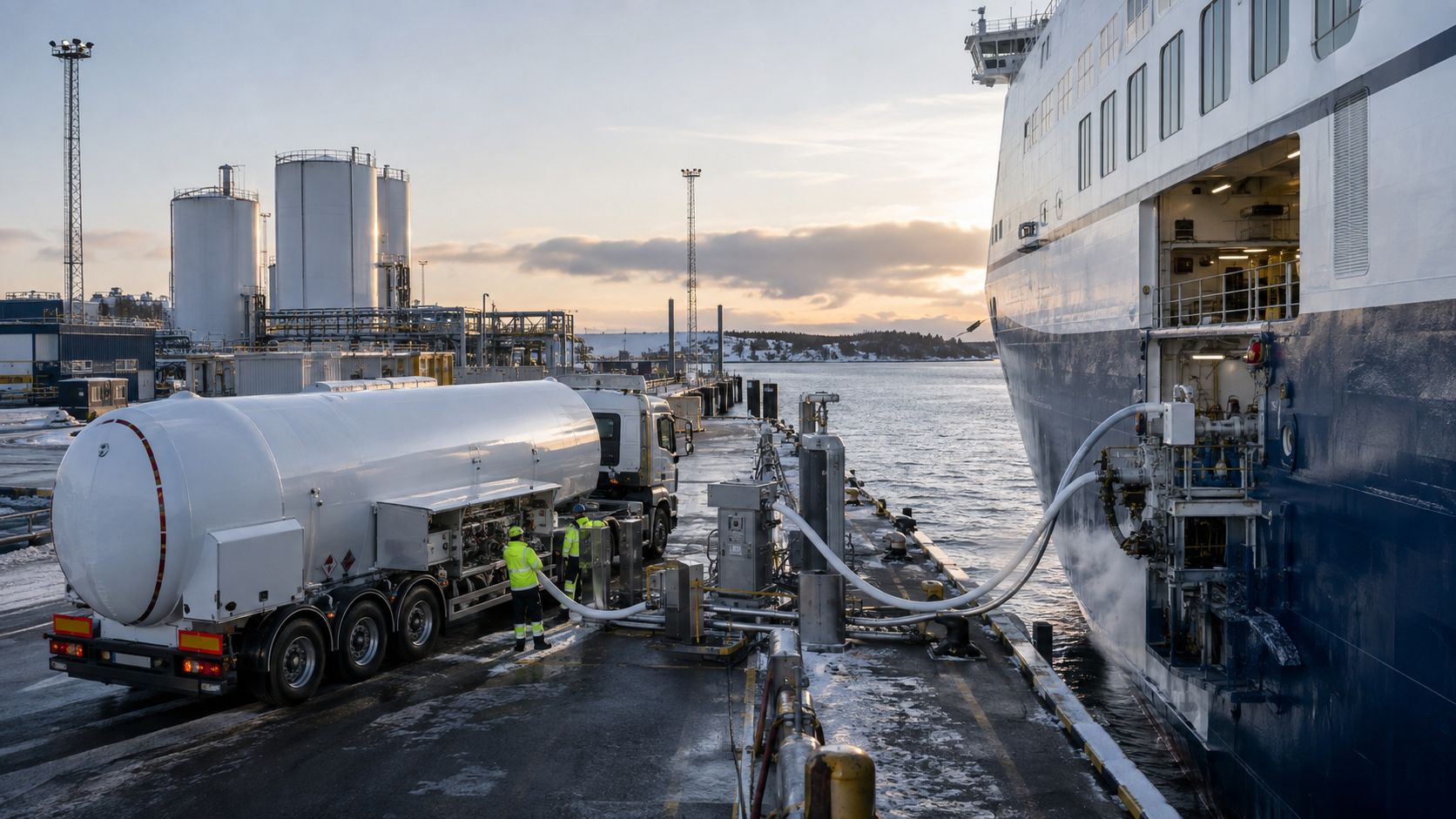
From pilot projects to regular supply — and logistics from Estonia
In 2025–2026 Bio-LNG (liquefied biomethane) moved from an experimental fuel to a practical tool for decarbonising short-sea shipping in Northern Europe. The process is particularly active in the Baltic Sea.
1. Why Northern Europe
- Dense network of ferry and ro-ro lines with regular sailings
- Large number of LNG-ready vessels (many built after 2017–2022)
- Strict FuelEU Maritime requirements and demand for pooling
- Local production of biomethane from waste streams
- Existing truck-to-ship and ship-to-ship bunkering infrastructure
2. Who is already using Bio-LNG
| Company | Vessels / routes | Notes |
|---|---|---|
| TT-Line | Nils Holgersson, Peter Pan (DE–SE–PL–LT) | Full 2025 season on Bio-LNG |
| Viking Line | Viking Glory, Viking Grace (Turku–Stockholm) | Pooling via Gasum |
| Wasaline | Aurora Botnia (Vaasa–Umeå) | Contract for 100% Bio-LNG |
| Destination Gotland | Ferries to Gotland | Supply via Avenir, ISCC |
| Tallink | MyStar, Megastar | Target: full switch to Bio-LNG |
| Wallenius SOL | Botnia Enabler, Baltic Enabler | Contract with Gasum |
Bunkering operations have also taken place in Klaipėda, Travemünde, Lübeck, and ports in Sweden, Finland and the Netherlands.
3. How the supply chain works
- Biogas production from waste → upgrading to biomethane
- Grid injection or direct liquefaction
- Delivery: truck-to-ship (flexible) or ship-to-ship (Avenir and others)
- Transfer of Proof of Sustainability (ISCC / NABISY-compatible PoS)
4. Bio-LNG logistics from Estonia
Estonia is well positioned to supply small-scale Bio-LNG both to the German road market and to ship bunkering in the Baltic Sea.
Possible schemes:
- Direct truck-to-ship bunkering in Estonian ports (Tallinn, Muuga, Paldiski) — subject to slots and demand from ferries/ro-ro.
- Delivery by cryogenic semi-trailer (230–280 MWh) to German Baltic ports (Travemünde, Rostock, Lübeck) with subsequent truck-to-ship or transfer to a bunker vessel.
- Deliveries to Klaipėda or Swedish ports with transshipment to ship-to-ship.
- Combined model: Bio-LNG one way + return load of conventional LNG (e.g. from Gate terminal) — reduces the cost of empty running.
Key success factors for an Estonian supplier:
- ISCC EU certification and ability to transfer PoS (including NABISY compatibility for German offtake).
- Reliable cryogenic trailer fleet and boil-off control.
- Flexibility on volume (one truck ≈ 230–280 MWh) and timing.
- Willingness to work both directly with shipowners and via bunker operators (Avenir, Gasum, Elenger and others).
5. Regulatory driver — FuelEU Maritime
Since 2025 FuelEU Maritime creates a direct economic incentive to use low-carbon fuels. Bio-LNG allows operators to meet greenhouse-gas intensity requirements, participate in pooling and offer customers a near carbon-neutral crossing. On short Baltic routes it is one of the fastest paths to compliance.
6. Conclusions and outlook
Bio-LNG has already proven its commercial viability on Baltic ferries. For suppliers from Estonia two parallel channels are open:
- The German road market (~180–200 LNG filling stations, almost 100% Bio-LNG).
- Marine bunkering in the Baltic Sea (ferries, ro-ro, feeders) — via truck-to-ship or in cooperation with bunker operators.
The most robust economics are achieved by combining these flows and minimising empty running (backhaul with conventional LNG).