
by Eurolng.com Staff
Small-Scale LNG in Latvia: market, players and 2025 analysis
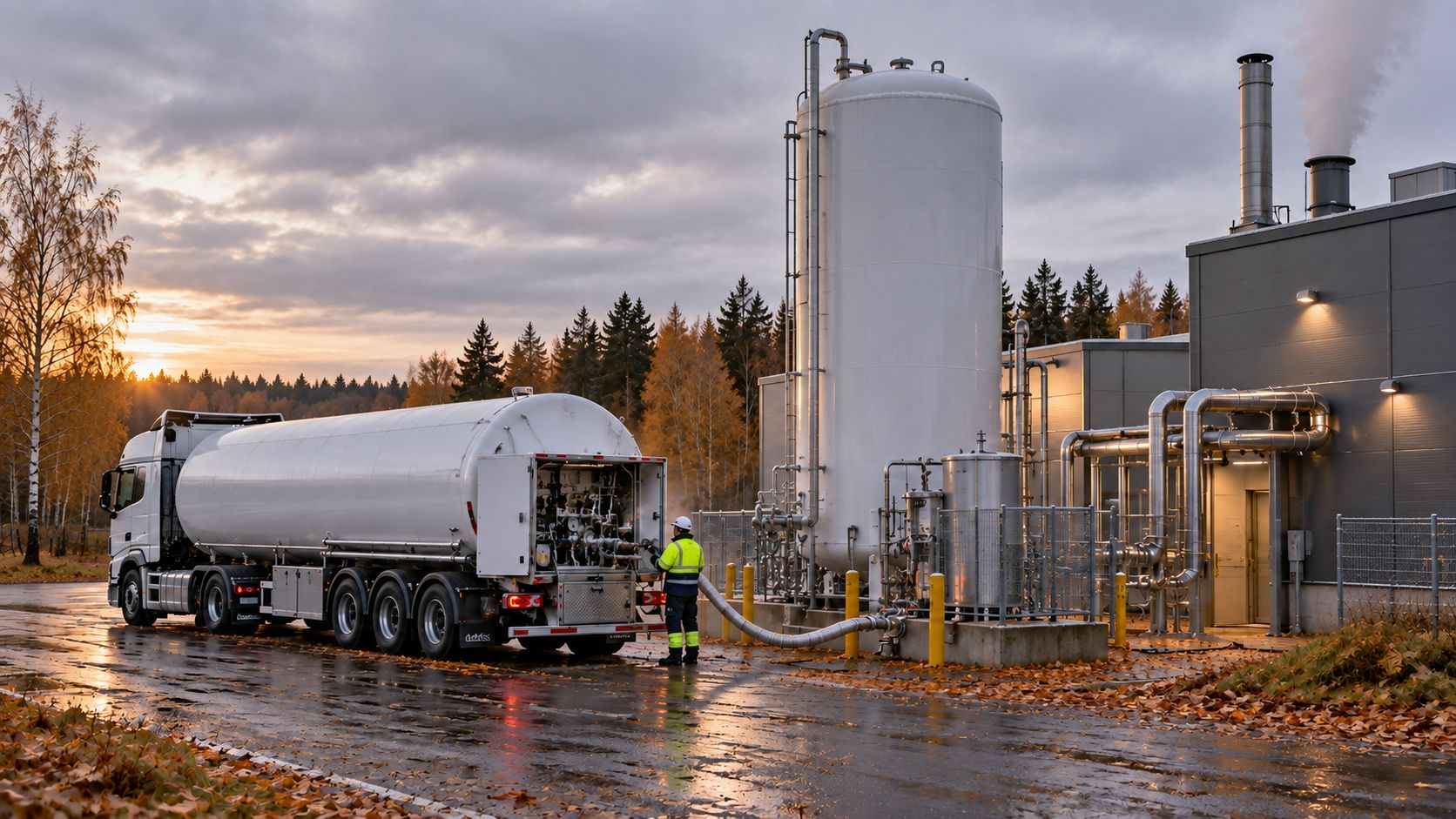
Sectors, suppliers, volumes and growth drivers
The small-scale LNG (ssLNG) market in Latvia remains small and niche. The country has no large LNG terminal of its own and relies on supplies via Klaipėda (Lithuania) and Estonia. Demand is driven mainly by industrial and district-heating sites without access to the gas grid. Below is the picture for 2025.
1. Market overview
Latvia sources ssLNG primarily from Klaipėda LNG (including the small-scale reloading station), Estonia and, to a lesser extent, Poland. The market is highly concentrated: in 2025 SIA JetGas sold about 50,000 MWh, while other participants together sold around 5,000 MWh. JetGas accounts for roughly 90% of the Latvian ssLNG market. Total volume is estimated at about 55,000 MWh.
2. Demand sectors
| Sector | Description | Role |
|---|---|---|
| Industry (off-grid) | Factories and boilers without grid gas. Replacing fuel oil, shale oil, LPG | Main volume |
| District heating | Local boiler houses and district heating networks | Significant |
| Transport | LNG/LCNG for trucks and buses. Limited infrastructure | Growing, small |
| Bunkering | Virtually absent at any meaningful scale | Minimal |
Most ssLNG acts as a “virtual pipeline” — delivered by road tanker to sites without grid connection.
3. Key players
| Company | Role and 2025 volume |
|---|---|
| JetGas (SIA JetGas) | Market leader. ~50,000 MWh. Import, regasification, own tanker fleet. Developing Bio-LNG |
| Other participants | Combined ~5,000 MWh (about 10× less). Local distributors and some trader volumes |
| Orlen / Latvenergo / Elenger | Regional supplies via Klaipėda; large traders mainly handle large-scale LNG |
JetGas holds a dominant position: about 90% of the Latvian ssLNG market by 2025 sales volume.
4. Sales growth drivers
| Factor | How it works | Strength |
|---|---|---|
| Fuel oil / shale oil switch | Off-grid sites move to gas — cleaner and often cheaper | Strong |
| No grid gas access | Road tankers act as a virtual pipeline | Strong |
| JetGas dominance | Own fleet, logistics, scale effects (~90% market) | Strong |
| Regional logistics | Established Klaipėda + Estonia routes | Medium–strong |
| Interest in Bio-LNG | Trial cargoes and partial switch to bio-LNG | Medium |
| Price competitiveness | When TTF is favourable, LNG beats fuel oil/LPG | Variable |
What is driving sales up:
- Structural off-grid demand — a permanent need, not a fashion segment;
- Market concentration delivers logistics scale and flexible terms;
- Supply stability after the shift to Klaipėda and Inkoo;
- Early Bio-LNG creates an entry point for future contracts.
What is holding growth back:
- Small size of the domestic market;
- Weak LNG filling-station network (transport barely grows);
- High concentration — hard for new entrants;
- Competition from grid gas and the long-term risk of electrification.
5. Volumes and infrastructure
- SIA JetGas: about 50,000 MWh in 2025.
- Other participants: combined about 5,000 MWh.
- Estimated total volume: around 55,000 MWh.
- No large LNG terminal of its own. Filling-station network is minimal.
- Main logistics: road tankers from Klaipėda and Estonia.
6. Outlook
Sales growth rests not on explosive demand but on structural fuel switching at off-grid sites and the dominance of one strong player. Further volume increases will be moderate and selective.
Additional growth may come from: expanding the customer base in district heating and light industry; a more active Bio-LNG offer; the appearance of public LNG filling stations; and possible new terminal capacity.
7. Conclusion
ssLNG in Latvia is road-tanker supply to industrial and heating customers off the grid. The key player is SIA JetGas (about 50,000 MWh in 2025, ~90% of the market). Other participants together sold roughly ten times less. Growth is supported by fuel-oil switching, off-grid demand and solid logistics. The market is niche, highly concentrated and dependent on regional supplies.