EuroLNG
Menu
  • Topics
    • European LNG market
    • Small-scale LNG
    • Green methane
  • About Us
  • Traderoom
  • Log In
  • Subscription
  • Terms and Conditions
  • Privacy Policy
  • Cookie Settings
Product has been added to your cart.
EN
RU

Bio-LNG vs Other fuels

Home
Topics
Green methane
Bio-LNG vs Other fuels
15 Sep at 06:47

by Eurolng.com Staff

Bio-LNG vs other fuels

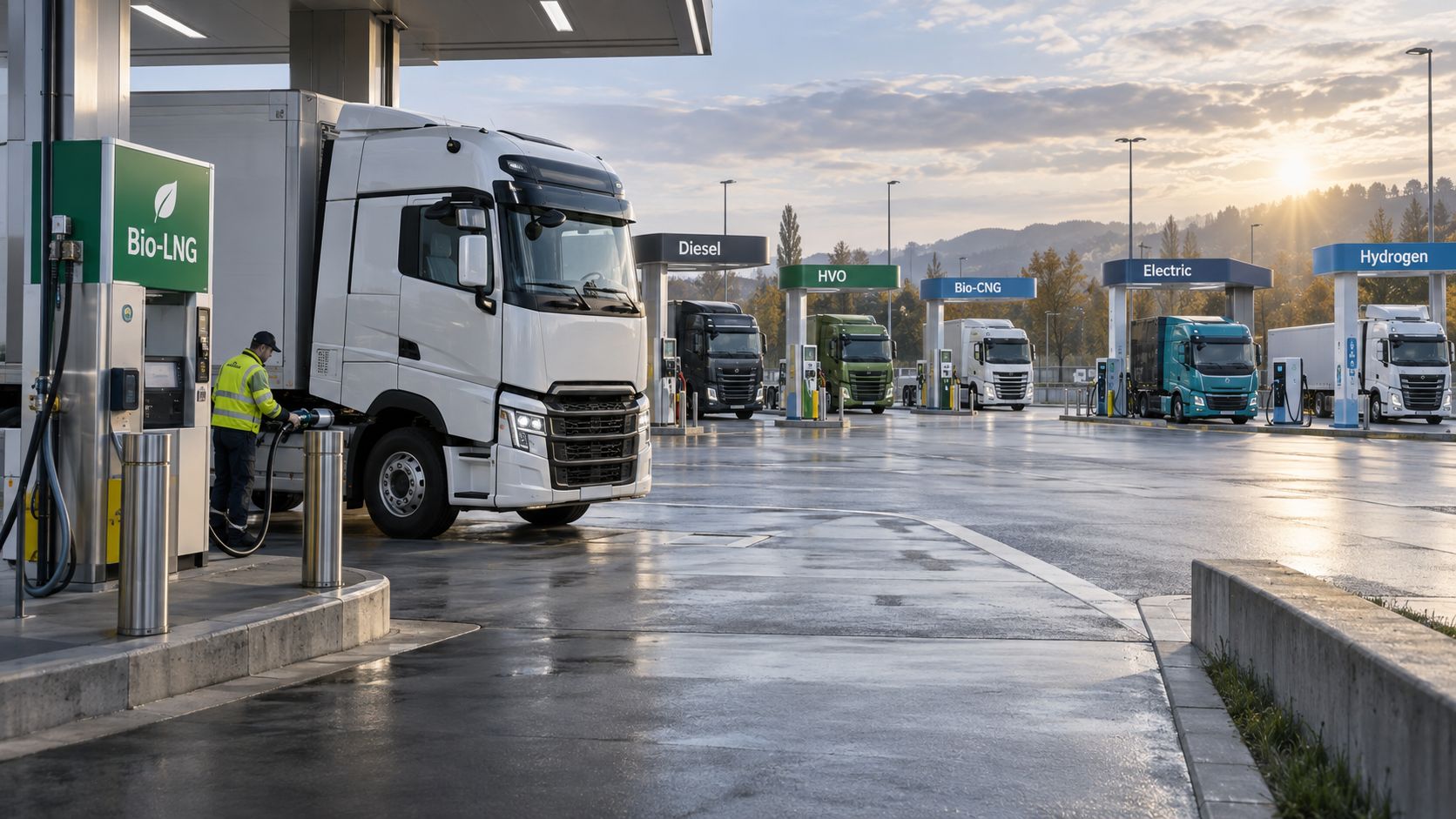
Comparison for Heavy-Duty Road Transport in Europe

Bio-LNG (liquefied biomethane) has become one of the most practical options for decarbonising heavy-duty transport in Germany and across Europe. Below is a clear comparison with the main alternative fuels available today.

Comparison table

Criterion Bio-LNG Diesel HVO100 Bio-CNG Battery Hydrogen
CO₂ reduction (WtW) 80–100%+ (negative possible) 0% (baseline) 50–90% 80–100%+ 60–100%* 0–100%*
Range 1,000–1,800 km 1,000–1,500 km Same as diesel 500–800 km 300–500 km 500–800 km
Refuelling time 10–15 min 10–15 min 10–15 min 10–20 min 1–4+ hours 15–20 min
Infrastructure (DE) ~180–200 stations Everywhere Growing Limited Growing Very limited
Technology readiness High (series trucks) Maximum Drop-in High Medium Low
New vehicles needed? Yes (LNG truck) No No Yes Yes Yes

* Depends on the carbon intensity of electricity or hydrogen production.

Key takeaways

1. Bio-LNG vs Diesel

Bio-LNG delivers major greenhouse-gas reductions (up to climate-neutral or even negative when produced from manure) while keeping range and refuelling time almost identical to diesel. Dedicated LNG trucks and access to the filling-station network are required.

2. Bio-LNG vs HVO100

HVO is a drop-in fuel for existing diesel engines. Bio-LNG usually offers deeper CO₂ cuts, especially with waste- and manure-based feedstock, but requires LNG vehicles.

3. Bio-LNG vs Bio-CNG

Both are biomethane. Bio-LNG wins on range (roughly 1.5–2× higher) and is better suited for long-haul operations. Bio-CNG is often more practical for regional and urban logistics.

4. Bio-LNG vs Battery-electric (BEV)

Battery trucks offer zero tailpipe emissions but are limited by range, charging time and payload. Bio-LNG remains more practical for long-distance heavy transport today.

5. Bio-LNG vs Hydrogen

Green hydrogen is a long-term option. At present the infrastructure is weak and costs are high. Bio-LNG is available now and significantly more economical in daily operation.

Conclusion

Bio-LNG currently offers one of the best balances for decarbonising heavy-duty road transport in Europe: substantial emission reductions, long range, fast refuelling and an already existing station network in Germany (~180–200 public sites). For fleets that need practical long-haul solutions between 2025 and 2030, Bio-LNG is among the most realistic options available today.

Previous Post
Bio-LNG logistics analysis
Next Post
Production methods for LNG, Bio-LNG and E-methane

Leave a Reply Cancel reply

Your email address will not be published. Required fields are marked *

Fill out this field
Fill out this field
Please enter a valid email address.
You need to agree with the terms to proceed

Latest Articles

  • LNG and CNG trucks in Europe: who leads — Scania, Volvo or Iveco? September 26, 2026
  • Bio-LNG growth in Belgium: Zeebrugge as a North-West European hub September 26, 2026
  • Long-term LNG contracts: US, Qatar and hybrid pricing formulas September 24, 2026
  • Small-scale LNG in the Netherlands: market, 2025 volumes and key players September 24, 2026
  • Bio-LNG or diesel: a Sweden case comparison September 23, 2026
EuroLNG

Europa LNG Intelligence
Metsavahi str. 29, Tallinn, 11911, Estonia

info@eurolng.com
Topics
European LNG market
Green methane
Small-scale LNG
  • Topics
  • About Us
  • Traderoom
  • Log In
  • Subscription
  • Terms and Conditions
  • Privacy Policy
  • Cookie Settings

2026 © All rights reserved

Website design
Manage Consent
To provide the best experiences, we use technologies like cookies to store and/or access device information. Consenting to these technologies will allow us to process data such as browsing behavior or unique IDs on this site. Not consenting or withdrawing consent, may adversely affect certain features and functions.
Functional Always active
The technical storage or access is strictly necessary for the legitimate purpose of enabling the use of a specific service explicitly requested by the subscriber or user, or for the sole purpose of carrying out the transmission of a communication over an electronic communications network.
Preferences
The technical storage or access is necessary for the legitimate purpose of storing preferences that are not requested by the subscriber or user.
Statistics
The technical storage or access that is used exclusively for statistical purposes. The technical storage or access that is used exclusively for anonymous statistical purposes. Without a subpoena, voluntary compliance on the part of your Internet Service Provider, or additional records from a third party, information stored or retrieved for this purpose alone cannot usually be used to identify you.
Marketing
The technical storage or access is required to create user profiles to send advertising, or to track the user on a website or across several websites for similar marketing purposes.
  • Manage options
  • Manage services
  • Manage {vendor_count} vendors
  • Read more about these purposes
View preferences
  • {title}
  • {title}
  • {title}