
by Eurolng.com Staff
Bio-LNG vs Other fuels
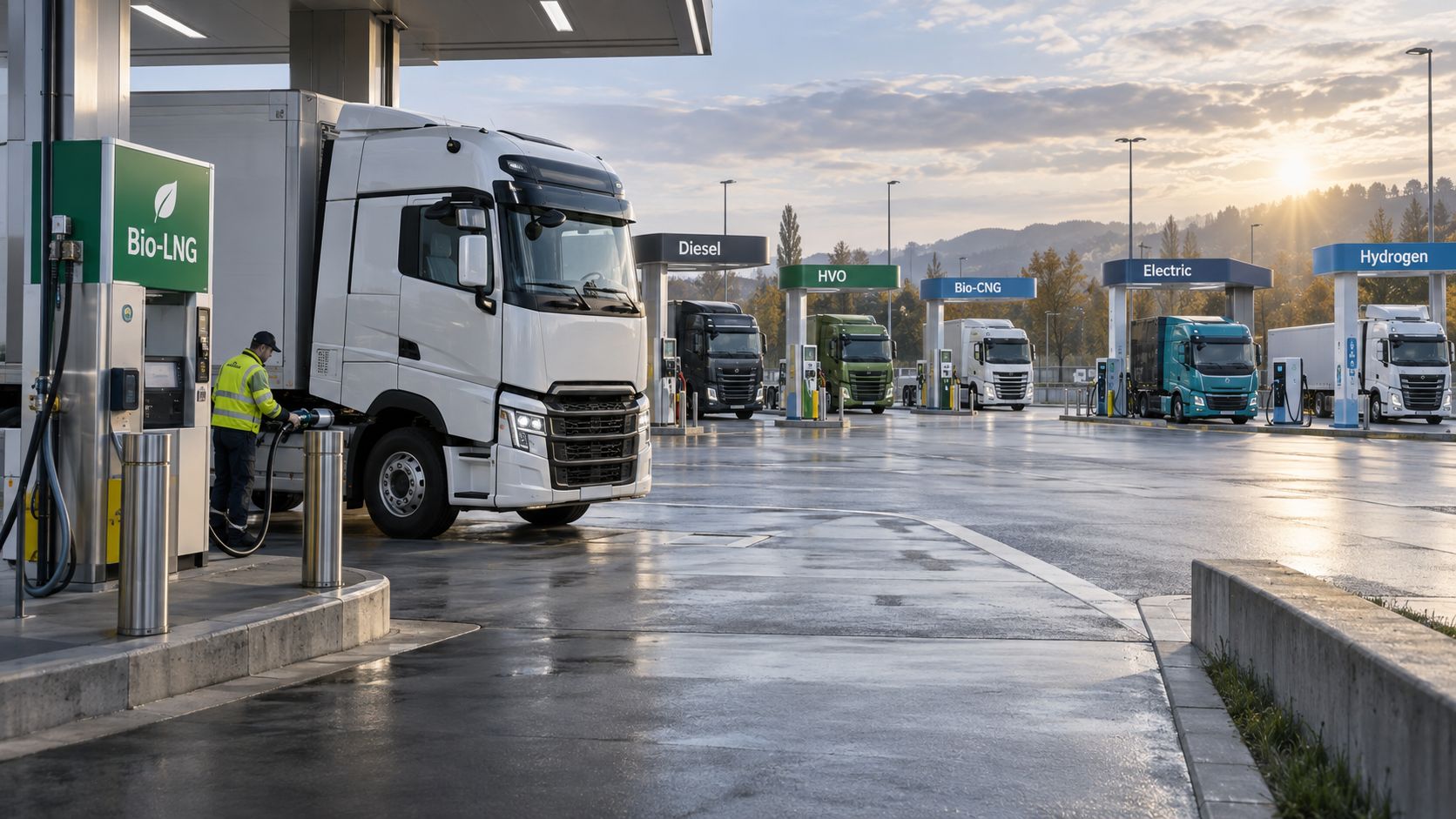
Comparison for Heavy-Duty Road Transport in Europe
Bio-LNG (liquefied biomethane) has become one of the most practical options for decarbonising heavy-duty transport in Germany and across Europe. Below is a clear comparison with the main alternative fuels available today.
Comparison table
| Criterion | Bio-LNG | Diesel | HVO100 | Bio-CNG | Battery | Hydrogen |
|---|---|---|---|---|---|---|
| CO₂ reduction (WtW) | 80–100%+ (negative possible) | 0% (baseline) | 50–90% | 80–100%+ | 60–100%* | 0–100%* |
| Range | 1,000–1,800 km | 1,000–1,500 km | Same as diesel | 500–800 km | 300–500 km | 500–800 km |
| Refuelling time | 10–15 min | 10–15 min | 10–15 min | 10–20 min | 1–4+ hours | 15–20 min |
| Infrastructure (DE) | ~180–200 stations | Everywhere | Growing | Limited | Growing | Very limited |
| Technology readiness | High (series trucks) | Maximum | Drop-in | High | Medium | Low |
| New vehicles needed? | Yes (LNG truck) | No | No | Yes | Yes | Yes |
* Depends on the carbon intensity of electricity or hydrogen production.
Key takeaways
1. Bio-LNG vs Diesel
Bio-LNG delivers major greenhouse-gas reductions (up to climate-neutral or even negative when produced from manure) while keeping range and refuelling time almost identical to diesel. Dedicated LNG trucks and access to the filling-station network are required.
2. Bio-LNG vs HVO100
HVO is a drop-in fuel for existing diesel engines. Bio-LNG usually offers deeper CO₂ cuts, especially with waste- and manure-based feedstock, but requires LNG vehicles.
3. Bio-LNG vs Bio-CNG
Both are biomethane. Bio-LNG wins on range (roughly 1.5–2× higher) and is better suited for long-haul operations. Bio-CNG is often more practical for regional and urban logistics.
4. Bio-LNG vs Battery-electric (BEV)
Battery trucks offer zero tailpipe emissions but are limited by range, charging time and payload. Bio-LNG remains more practical for long-distance heavy transport today.
5. Bio-LNG vs Hydrogen
Green hydrogen is a long-term option. At present the infrastructure is weak and costs are high. Bio-LNG is available now and significantly more economical in daily operation.
Conclusion
Bio-LNG currently offers one of the best balances for decarbonising heavy-duty road transport in Europe: substantial emission reductions, long range, fast refuelling and an already existing station network in Germany (~180–200 public sites). For fleets that need practical long-haul solutions between 2025 and 2030, Bio-LNG is among the most realistic options available today.