
by Eurolng.com Staff
LNG market trends: 2026 analysis and outlook
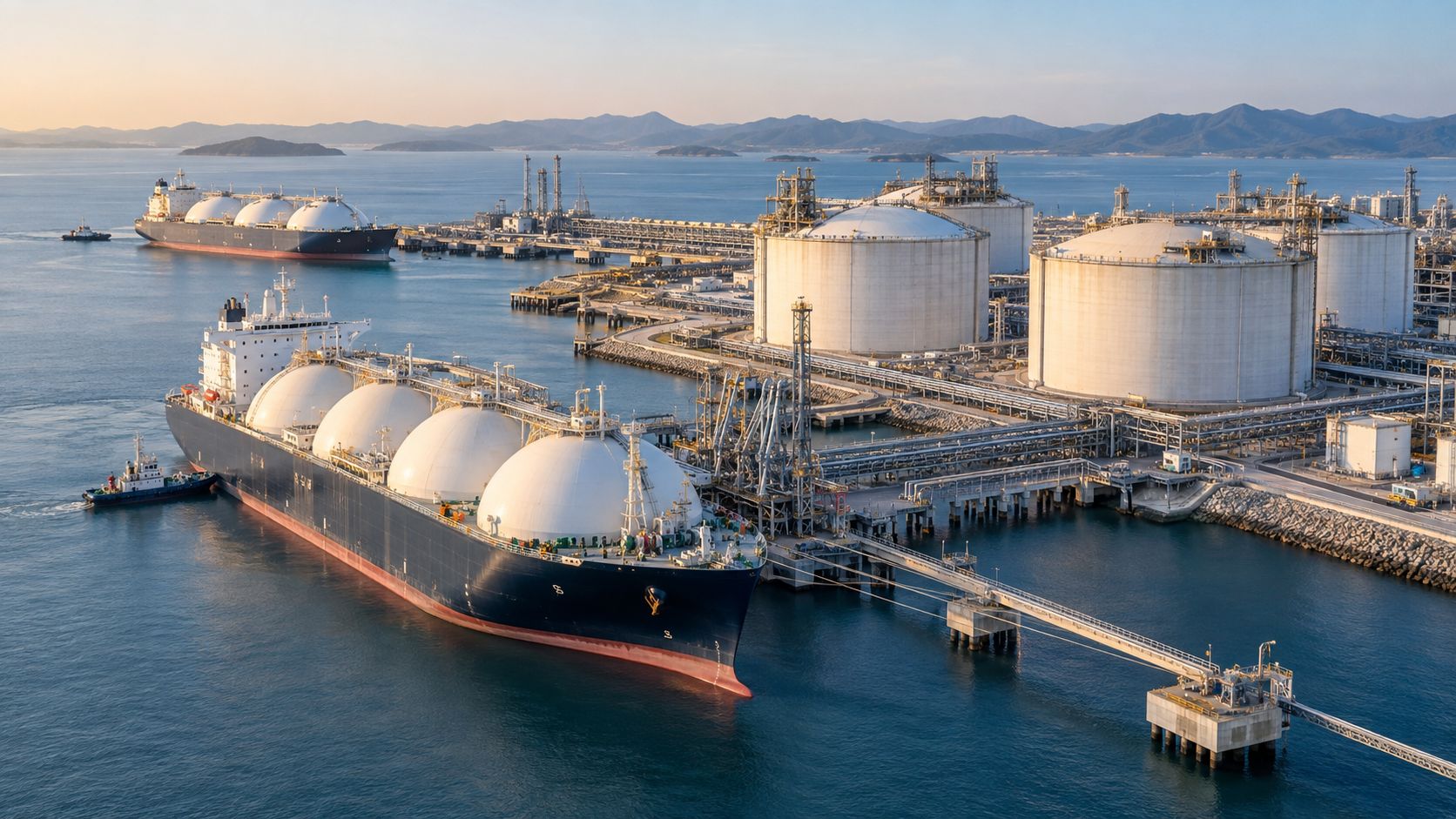
Delayed oversupply, elevated prices and the next wave of capacity
The global LNG market in 2026 is shaped by two opposing forces: strong growth in non-Gulf supply and a sharp reduction in exports from Qatar and the UAE due to the Middle East conflict. As a result, the market remains tighter than previously expected, prices stay elevated, and the long-anticipated oversupply has been postponed rather than cancelled.
1. Supply: growth meets disruption
New projects in North America, Africa and Australia are adding close to 50 bcm of LNG supply in 2026. At the same time, combined LNG output from Qatar and the UAE is estimated to fall by around 45 % year-on-year because of infrastructure damage and the temporary closure of the Strait of Hormuz.
Net effect: global LNG supply for the full year 2026 is expected to remain broadly flat. The much-discussed “glut” has been delayed.
A major wave of new liquefaction capacity is still scheduled from 2027 onward (Rio Grande, Port Arthur, Woodfibre, NLNG Train 7 and further phases of Qatar’s North Field expansion), potentially adding 40–50+ mtpa in 2027 alone.
2. Demand: Asia softens, Europe competes
- Asia: Chinese LNG demand has been revised slightly lower on weaker industrial and property-related consumption. High spot prices are deterring buyers in South Asia. September 2026 is on track to be one of the weakest months for Asian LNG imports in recent years.
- Europe: is competing more actively for flexible cargoes, especially to refill storage ahead of winter. European LNG imports are rising in September–October.
- Longer term: demand growth is still expected in South and Southeast Asia, as well as in bunkering and industrial segments.
3. Prices: higher for longer
TTF and JKM in 2026 have traded well above 2025 levels. In peak periods (spring 2026) JKM moved above $25/MMBtu. By September 2026 spot prices remain elevated in the mid-teens to mid-twenties range depending on the assessment. Henry Hub stays relatively low (around $2.9/MMBtu), preserving strong margins for US exporters.
Basin spreads have widened and narrowed with the availability of Qatari volumes and the direction of flexible cargoes. The market has become more sensitive to geopolitical news than to pure supply-demand balances.
4. Structural trends
| Trend | Implication |
|---|---|
| US-led supply growth | United States consolidates its position as the world’s largest LNG exporter |
| Geopolitical risk premium | Hormuz and Gulf infrastructure have become key sources of price volatility |
| Delayed oversupply | Risk of softer prices shifts to 2027–2029 as new capacity ramps up |
| Certification & low-carbon LNG | Bio-LNG and certified volumes gain value under FuelEU Maritime and national quotas |
| Small-scale opportunity | More accessible conventional LNG + rising demand for flexible and green volumes |
5. Implications for Europe and the Baltics
Europe remains heavily dependent on Atlantic (mainly US) cargoes. Elevated volatility supports interest in long-term contracts and formula pricing (TTF + premium).
For the small-scale LNG and Bio-LNG segment the current environment creates clear opportunities:
- more competitive pricing of conventional LNG as base feedstock;
- stronger demand for certified low-carbon volumes;
- logistics and backhaul opportunities from European and Baltic terminals.
6. Outlook
2026: tight-to-balanced market, elevated prices, strong competition for flexible cargoes.
2027–2028: significant capacity additions → risk of market softening and lower spot prices (absent new geopolitical shocks).
Post-2030: the market may tighten again as Asian demand continues to grow and the current investment wave matures.
7. Conclusion
The LNG market in 2026 is a market of delayed oversupply. Geopolitics has temporarily absorbed part of the new capacity, keeping prices higher than expected. The real test of the supply wave will come from 2027 onward. For small-scale LNG and Bio-LNG players this creates a window of opportunity: flexibility, certification and regional logistics are becoming decisive competitive advantages.