
by Eurolng.com Staff
Bio-LNG or diesel: a Sweden case comparison
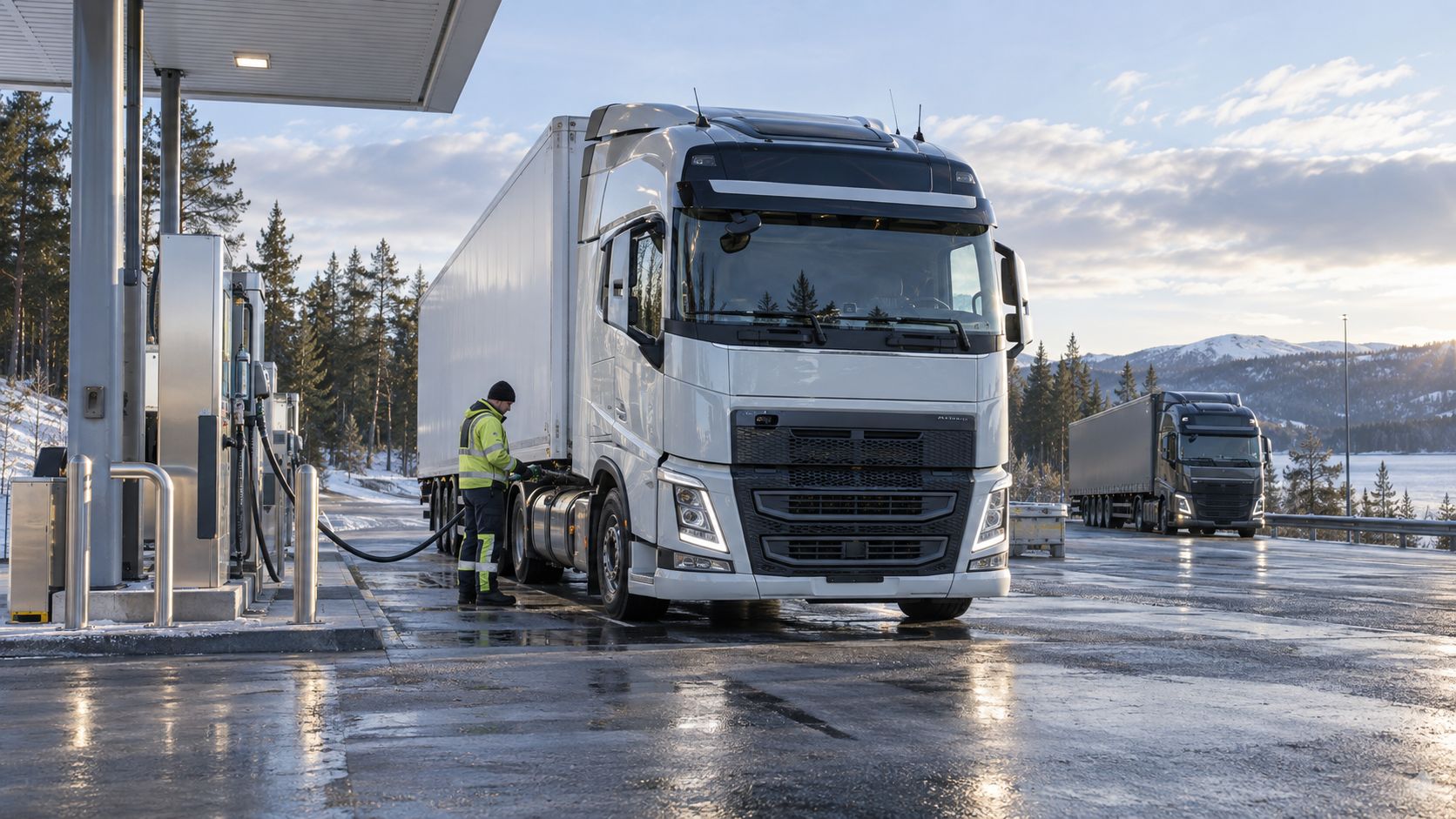
Prices, fuel consumption and TCO for a long-haul truck
Sweden is one of Europe’s most developed markets for liquefied biomethane (LBG / Bio-LNG). Large production plants, a growing filling-station network and rising demand from heavy-duty transport and shipping are already in place. Below is a practical comparison of Bio-LNG and diesel: prices, energy content and a simplified total cost of ownership (TCO) for a long-haul tractor unit.
1. Swedish market context
- In 2025, LNG/LBG sales for road transport reached about 717 GWh, of which LBG accounted for roughly 77 %.
- Key players: Gasum (stations and production), St1 Biokraft, Nordion Energi and several local producers.
- Bio-LNG is used both in road transport and in ferry bunkering (Destination Gotland, TT-Line and others).
2. Fuel prices (indicative, September 2026)
| Fuel | Price | Indicative €/MWh |
|---|---|---|
| Diesel | ~€2.05–2.10 / litre | ~200–215 |
| Bio-LNG (LBG) | ~€2.1–2.2 / kg | ~155–165 |
| HVO100 | ~€3.0–3.2 / litre | Significantly higher |
On an energy basis, Bio-LNG is often 15–25 % cheaper than conventional diesel. HVO100, by contrast, is markedly more expensive than both.
3. TCO assumptions
- Long-haul tractor, annual mileage 120,000 km (5 years = 600,000 km).
- Diesel consumption: 28 l / 100 km.
- Bio-LNG consumption: ~21.5 kg / 100 km (energy equivalent).
- Extra cost of LNG tractor: +€30,000.
- Road tolls and incentives not included (gas vehicles often benefit in practice).
4. Simplified 5-year TCO
| Item | Diesel | Bio-LNG |
|---|---|---|
| Extra cost of vehicle | €0 | +€30,000 |
| Fuel over 5 years | ~€349,000 | ~€277,000 |
| Total (fuel + vehicle premium) | ~€349,000 | ~€307,000 |
| Bio-LNG advantage | — | ~€42,000 |
Payback on the LNG tractor premium is about 2–2.5 years at 120,000 km per year. Annual fuel savings are in the order of €12,000–15,000.
5. What strengthens or weakens the case
- Higher mileage (150,000 km/year) → larger Bio-LNG advantage.
- Contract Bio-LNG price below retail → stronger economics.
- Road-toll discounts for gas trucks → additional benefit.
- Comparison vs HVO100 instead of standard diesel → Bio-LNG wins even more clearly.
6. Conclusion
Using Sweden as an example, Bio-LNG can already be economically preferable to diesel for long-haul operations. At a typical 120,000 km per year, the extra cost of a gas tractor pays back in about 2–2.5 years, and over five years the combined advantage (fuel savings minus vehicle premium) is around €40,000–45,000 — before any toll or CO₂ incentives. For fleets with high mileage and access to contract supply from Gasum or St1 Biokraft, switching to Bio-LNG is a rational step both for cost and for decarbonisation.