
by Eurolng.com Staff
Small-scale LNG in the Netherlands: market, 2025 volumes and key players
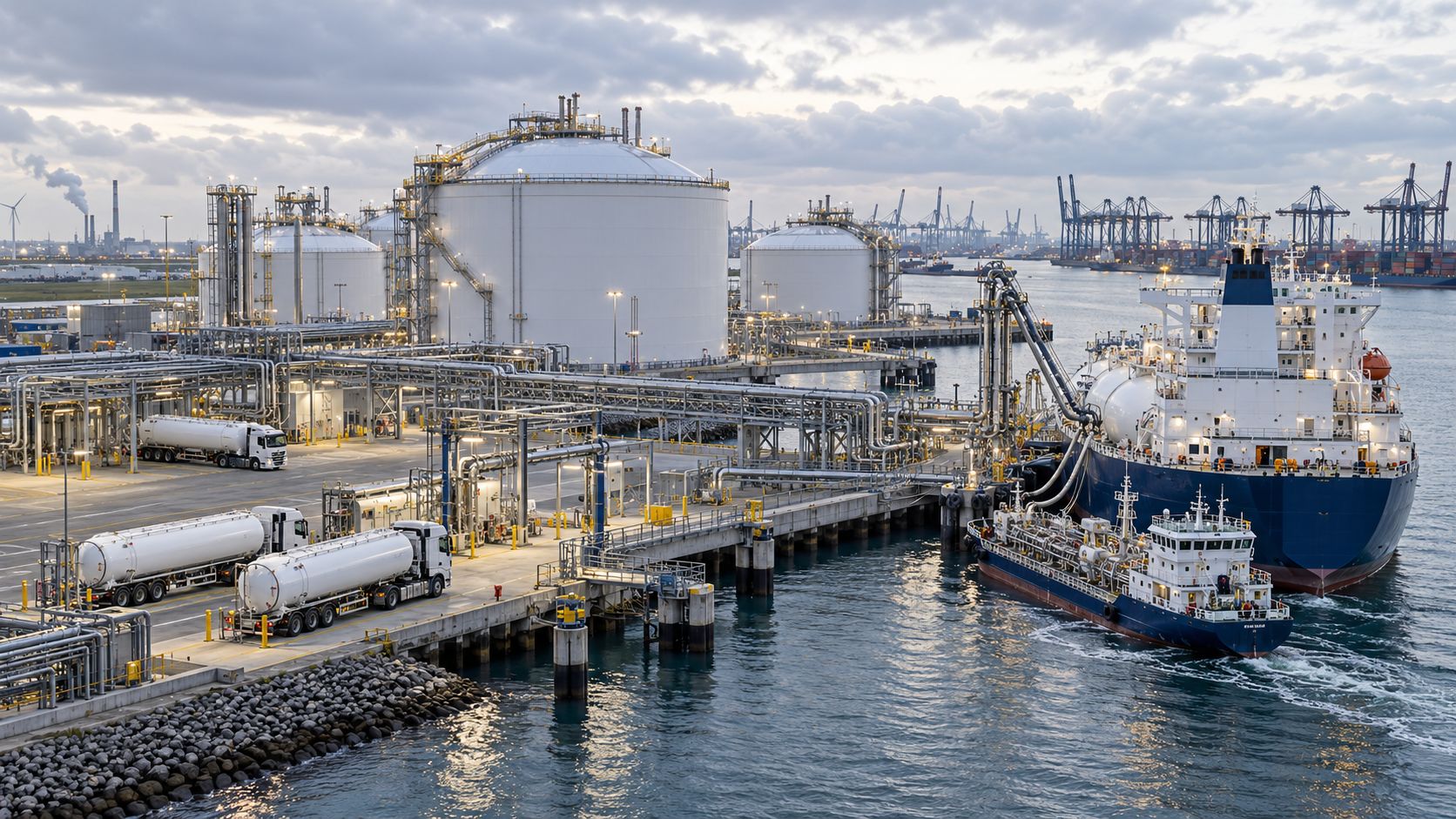
Rotterdam, Gate terminal, bunkering and Bio-LNG
The Netherlands is one of the main small-scale LNG hubs in North-West Europe. The centre of the market is the Port of Rotterdam and the Gate terminal (Gasunie + Vopak). Large-scale LNG imports, truck loading, reloading onto small vessels and marine bunkering all meet here. 2025 was a record year for bunkering volumes and a sharp rise in Bio-LNG.
1. Market structure
The main small-scale LNG segments in the Netherlands are:
- Marine bunkering (the primary growth driver)
- Truck loading — filling road tankers for industry and transport (NL, Belgium, Germany)
- Bio-LNG (production and supply)
- Reloading / back-loading onto small vessels
2. 2025 volumes
| Segment | 2025 volume | Trend |
|---|---|---|
| LNG bunkering (Rotterdam) | > 1 million m³ | Record, up vs 2024 |
| of which Bio-LNG | 17,644 m³ | ×6 vs 2024 (2,775 m³) |
| Indicative tonnage (bunkering) | ~450–500 kt | Among the largest in Europe |
There is no separate public breakdown of total truck-loading volumes, but Gate remains the main loading point for road tankers and small vessels serving the ARA region and neighbouring countries.
3. Key trends
- Bunkering growth. Rotterdam has cemented its position as the leading LNG bunkering hub in the ARA region. Demand is supported by FuelEU Maritime and the EU ETS.
- Bio-LNG. Sharp volume growth. Gate operates Bio-LNG production (around 100 kt/year), with output going into bunkering and truck supply.
- Infrastructure expansion. Gate is building a fourth tank and raising regas capacity to about 20 bcm/year (2026). Capacity on the new small-scale jetty has already been allocated to Shell and TotalEnergies.
- Consolidation. Molgas fully acquired Titan Clean Fuels in 2025, strengthening its position in bunkering and land-based SSLNG.
- Competition for capacity. Strong demand for small-scale slots and bunker vessels in the region.
4. Main players
| Company | Role |
|---|---|
| Gate terminal (Gasunie + Vopak) | Main hub: import, storage, truck loading, back-loading, Bio-LNG, small-scale jetty |
| Titan Clean Fuels (Molgas) | Leading bunker supplier (FlexFueler and others), STS in Rotterdam and Amsterdam |
| Shell | Bunkering; small-scale capacity on the new Gate jetty |
| TotalEnergies | Bunkering, JV with CMA CGM, small-scale capacity at Gate, long-term supply |
| Anthony Veder and others | Small-scale / bunker vessel fleet |
Engie, traders and local truck-logistics operators are also active.
5. Conclusion
The Dutch small-scale LNG market is mature and still growing, driven mainly by marine bunkering. 2025 set a record: more than 1 million m³ of LNG delivered as marine fuel, and a sixfold increase in Bio-LNG. Gate terminal remains the key gateway for small-scale logistics in North-West Europe. Further growth will be supported by shipping regulation (FuelEU, EU ETS), Gate capacity expansion and demand for certified Bio-LNG.