
by Eurolng.com Staff
Small-scale LNG: Slovakia vs Czechia
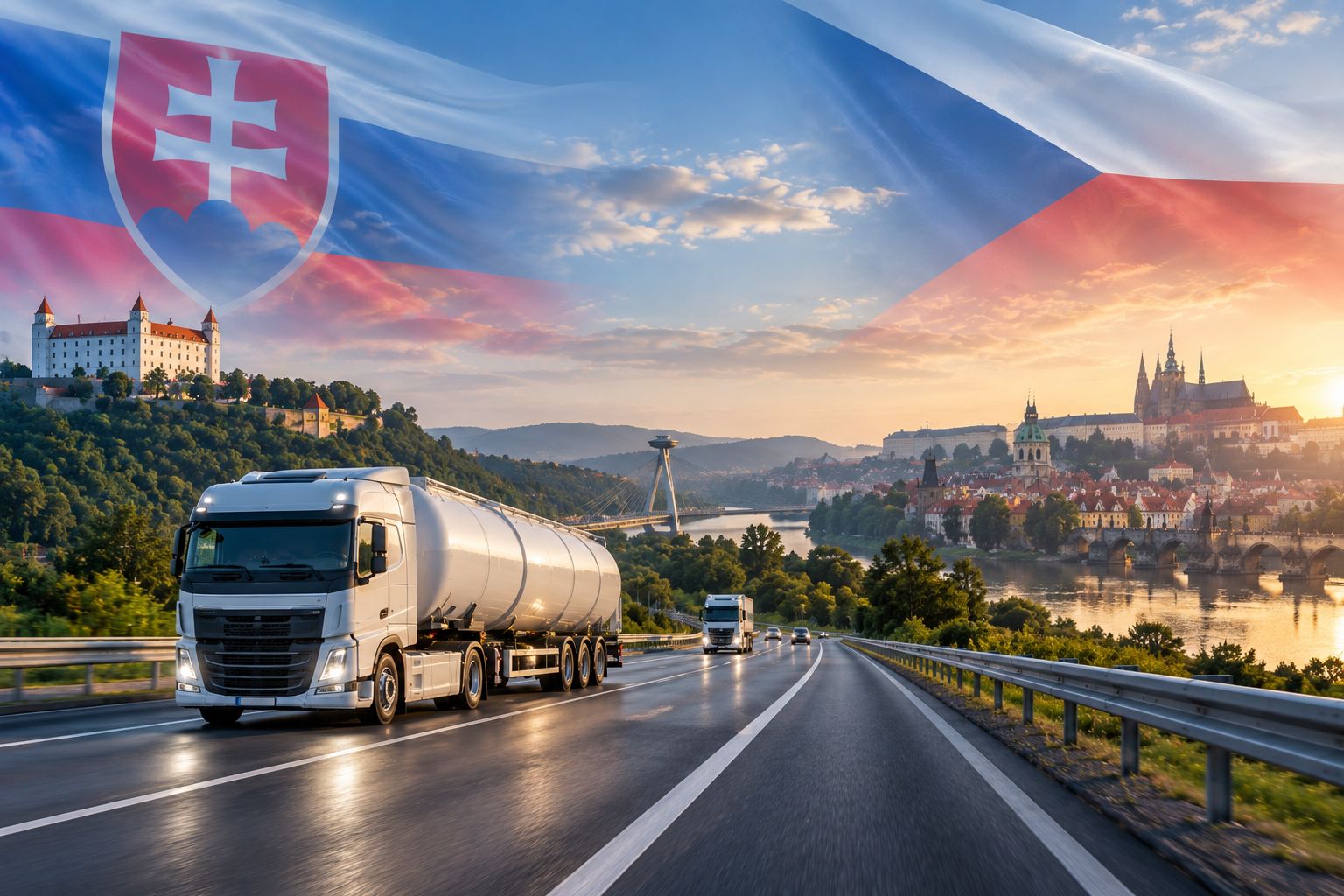
Comparison of two neighbouring Central European markets (with price data)
Slovakia and Czechia are neighbouring countries with similar economic structures and transport corridors. Both small-scale LNG markets are driven primarily by heavy-duty road transport. Czechia appears more mature in terms of infrastructure and Bio-LNG availability, while Slovakia is at an earlier growth stage with a focus on the international D1/D2 corridors.
1. Comparison table
| Parameter | Slovakia | Czechia |
|---|---|---|
| Main segment | Road freight (D1/D2) | Road freight (D1, D8, D10, D11) |
| LNG stations (indicative) | ~9 stations | 6+ GasNet stations; public CNG/LNG ~218–249 |
| Key operators | Shell Slovakia, HaboLNG | GasNet (leader) |
| Bio-LNG | Available, ~+30% vs LNG | GasNet selling since 2024 across its network |
| LNG share in HD trucks | ~2% (estimate) | Higher; regular users present |
| Domestic LNG production | None (truck imports) | None (imports / distribution) |
| Biomethane / support | NECP target ~300 mln Nm³ by 2030 | 2026 auctions (oversubscribed ×4) |
2. LNG prices (indicative 2025–2026)
Retail LNG prices at filling stations depend on TTF, logistics, taxes and operator margin. Below are indicative levels for Central Europe.
| Fuel | Slovakia (indicative) | Czechia / region |
|---|---|---|
| LNG (retail, €/kg) | ~1.5–1.9 €/kg (2025 stats) | Comparable range; linked to TTF + logistics |
| Bio-LNG | ~+25–35% vs conventional LNG | Available at GasNet; premium depends on certificates |
| Diesel (for comparison) | ~1.90–1.95 €/l (Sep 2026) | ~1.99 €/l (Sep 2026) |
| TTF (wholesale benchmark) | High volatility in 2026; peaks ~€70–90+/MWh | Same European benchmark |
Note: Station prices are published irregularly and depend heavily on the purchase timing of each batch and the exchange rate. In Slovakia official statistics recorded LNG roughly in the 1.5–1.8+ €/kg range during 2025. Bio-LNG remains significantly more expensive due to certificate premiums and tax burden.
3. What is common
- Both markets are “transport-driven”: LNG is used almost exclusively in heavy-duty trucks.
- No domestic large-scale LNG production — supply comes by road tanker from European terminals.
- Interest in Bio-LNG as the next step in decarbonisation.
- Importance of international corridors.
4. Where Czechia is ahead
- More structured station network under a strong single operator (GasNet).
- Earlier launch of retail Bio-LNG sales.
- More active biomethane support policy (2026 auctions heavily oversubscribed).
5. Slovakia’s specific features
- Strong transit position (West ↔ South-East / Hungary).
- Presence of international (Shell) and local (HaboLNG) players.
- Main barrier — Bio-LNG premium and limited ability to monetise the green attribute.
6. Conclusions
Czechia is currently the more mature and organised small-scale LNG market for trucks. Slovakia is still building its network and demand base, but benefits from transit flows. Conventional LNG prices in both countries sit in a comparable range and follow TTF plus logistics; Bio-LNG remains significantly more expensive, which limits mass adoption.
Competitive advantage will go to suppliers able to offer certified Bio-LNG at an acceptable price with transparent logistics.