
by Eurolng.com Staff
LNG vs LPG: competition on Poland’s small-scale market
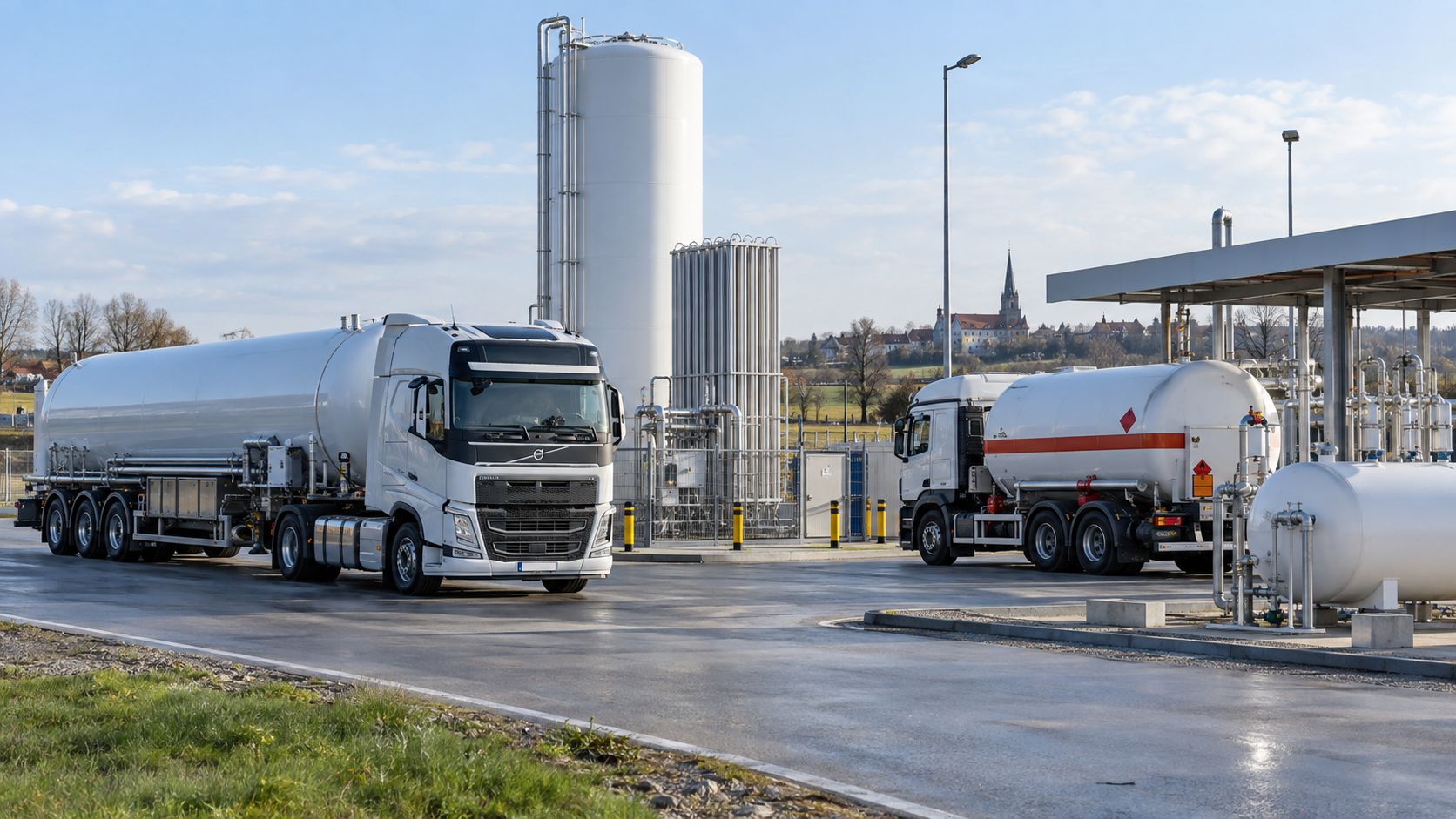
Two liquefied gases, two different development paths — who occupies which niches in 2025–2026
In Poland two liquefied gas segments are developing in parallel: classic LPG (propane-butane) and small-scale LNG. Both are delivered by road tanker, both serve off-grid customers and transport, yet their market positions, growth drivers and outlook differ substantially.
1. LPG: a mature and large market
LPG in Poland is one of the largest markets in Europe. In 2025 consumption reached approximately 2.45 million tonnes. The bulk is autogas (≈73 %), followed by the residential/commercial sector, industry and agriculture.
The key event of 2025–2026 has been the complete exit from Russian LPG. After EU sanctions the share of Russian supply fell from over 40 % to zero. The market rapidly reoriented to seaborne imports: Sweden, Norway, the USA and the UK became the main sources. The share of maritime imports rose from 29% to 57%.
LPG remains a mass-market, relatively cheap and familiar fuel, especially in autogas and for small boilers/tanks. The infrastructure (tens of thousands of tanks, a wide dealer network) has been built over decades.
2. Small-scale LNG: rapid growth from a low base
Small-scale LNG in Poland is growing much faster in relative terms. According to ORLEN, loading volumes have increased roughly twenty-fold since 2016 and reached about 192 thousand tonnes from the Świnoujście terminal alone in 2025. Together with volumes from Klaipėda and ORLEN’s own liquefaction plants (Odolanów, Grodzisk) the Group’s total exceeded 245 thousand tonnes.
Main applications of LNG:
- industrial customers and “gas islands” without pipeline access;
- heavy-duty road transport (LNG trucks);
- prospective ship bunkering.
3. LNG vs LPG comparison on the small-scale market
| Parameter | LPG | Small-scale LNG |
|---|---|---|
| Market size (PL, 2025) | ~2.45 mt | ~0.2–0.25 mt (small-scale) |
| Main segments | Autogas, small boilers, minor off-grid | Industry, off-grid, heavy trucks |
| Infrastructure | Very mature (decades) | Growing (terminals + road tankers) |
| Energy density | Lower than LNG | Higher → fewer trips for the same energy |
| GHG / environment | Better than diesel, weaker than LNG/Bio-LNG | Lower emissions; Bio-LNG is a strong plus |
| Price sensitivity | High (mass product) | More premium / B2B segment |
| 2025–26 driver | Supply source switch (exit from Russia) | Demand growth + terminal capacity expansion |
4. Where the products actually compete
Direct competition is limited. LPG dominates autogas for passenger and light commercial vehicles and small residential/commercial installations. LNG is stronger in:
- medium and large industrial consumers that value volume and supply stability;
- heavy-duty trucking (range and emissions);
- sites that already have or plan a regasification station.
In the “medium off-grid” segment the choice often depends on delivered price, tanker availability and the customer’s willingness to invest in equipment.
5. Outlook to 2030
LPG will remain a mass fuel, but growth will be constrained by transport electrification and possible environmental restrictions. After the full logistics reorientation the market has stabilised.
Small-scale LNG will continue to grow faster than the overall market. Capacity expansion at Świnoujście (up to 60 tankers per day), plans for Gdańsk and Klaipėda, and rising interest in Bio-LNG support this trend. ORLEN is already running regular demand surveys for LNG and Bio-LNG.
For suppliers from the Baltics (including Estonia) the Polish LNG market is an interesting growing B2B channel, especially when combined with deliveries to Germany and the possibility of backhaul.
6. Conclusion
LPG and LNG in Poland complement rather than displace each other. LPG is a large, mature, price-sensitive market with a strong position in autogas. Small-scale LNG is a younger, fast-growing segment focused on industry, off-grid sites and heavy transport, with better environmental performance and higher energy density. In the coming years competition will intensify mainly in the industrial and transport off-grid segments, where customers weigh capital expenditure, fuel price and emission requirements.